
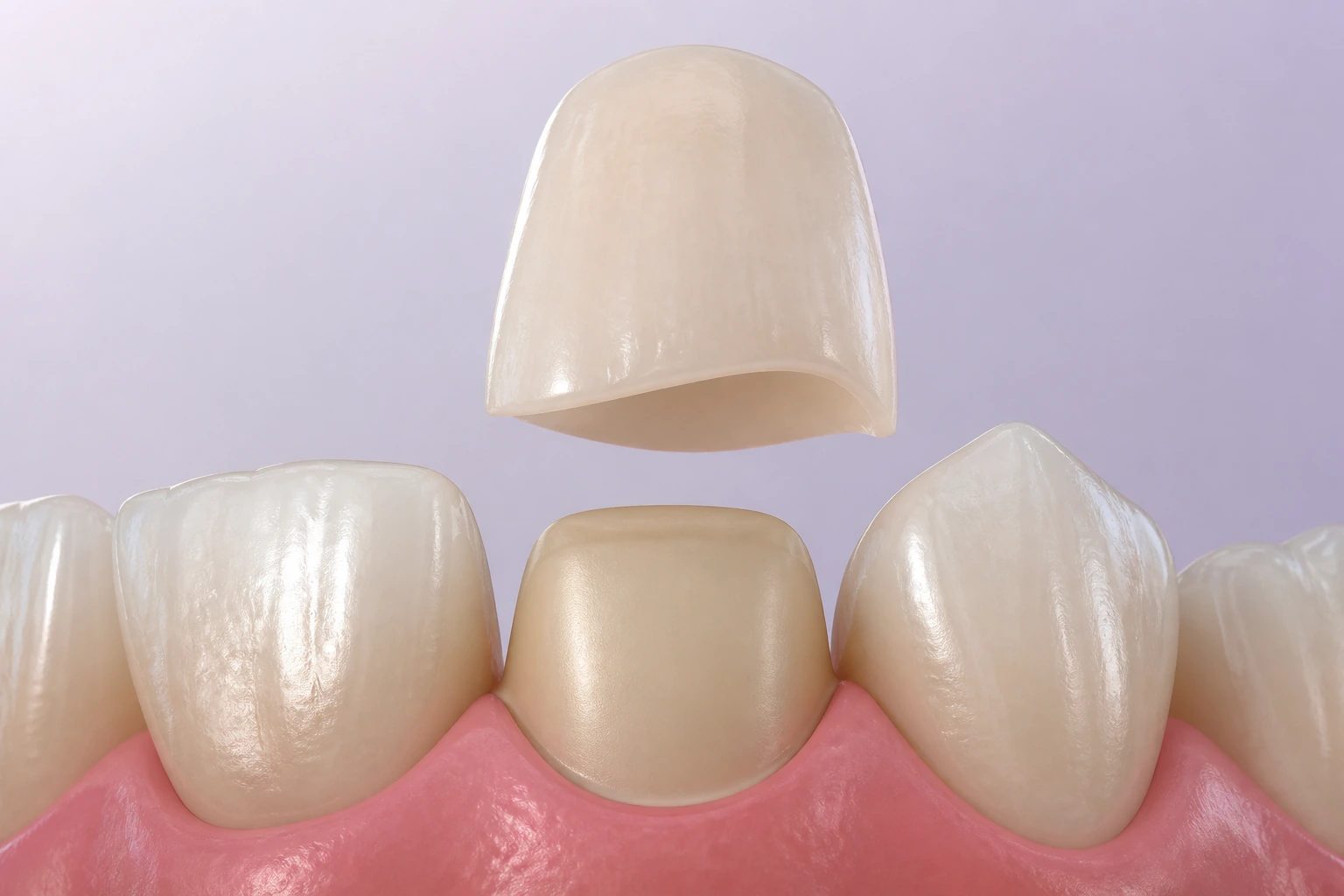
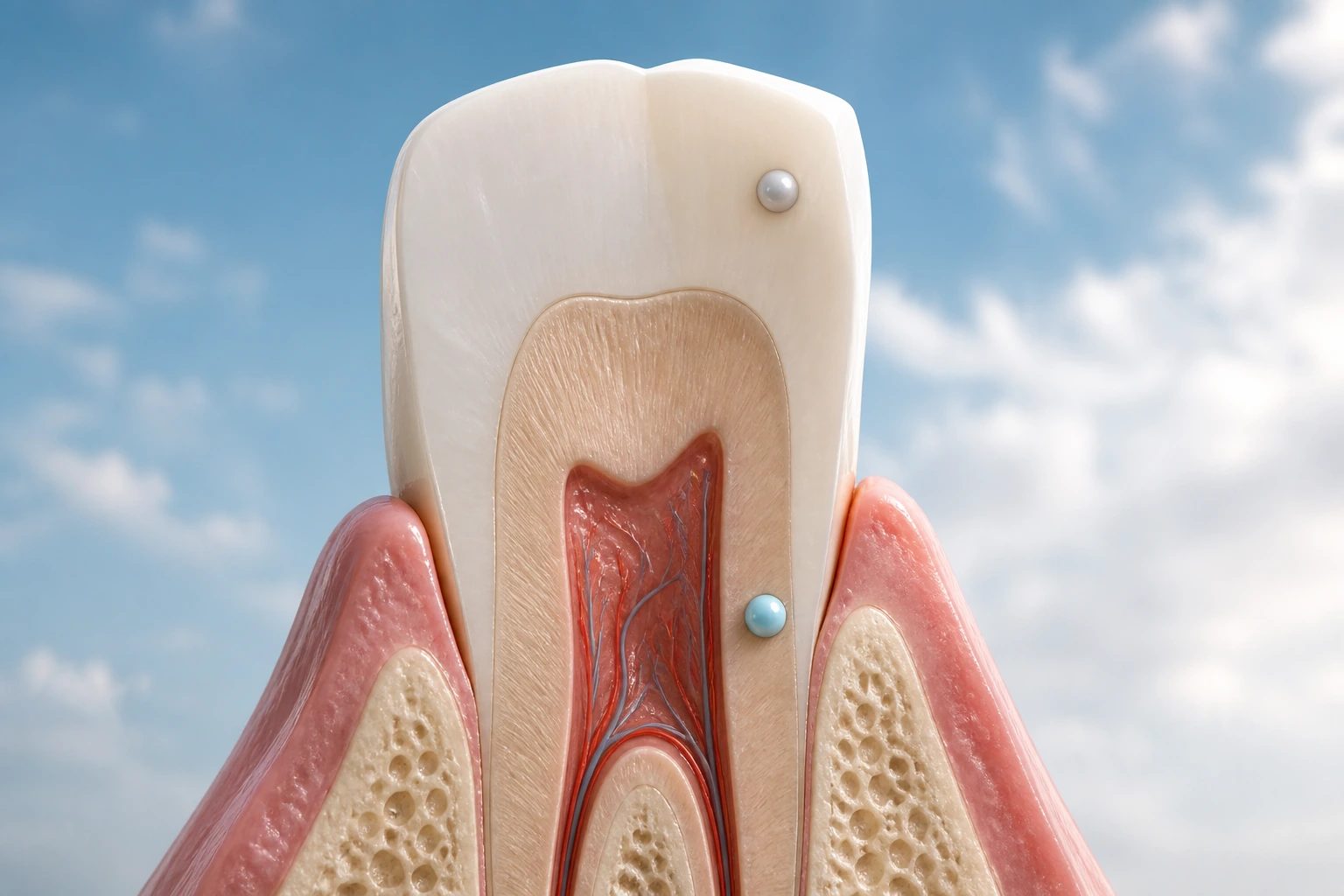

First: the geometry that arrived.
TL-8246 opens the received maxillary arch scan. FDI 11 is prepared; a crown does not yet exist inside that file.
- Case
- TL-8246
- Site
- FDI 11 · Universal #8
- Content
- Received treatment scan
DENTAL STL ANALYSIS · FROM FILE TO PRODUCTION
TrazaLab separates the received scan from the restorative design, retains the technical inspection, and carries the result to an identifiable production decision.
Editorial visualizations · Locally verified capabilities · Pillar 3 claim boundaries.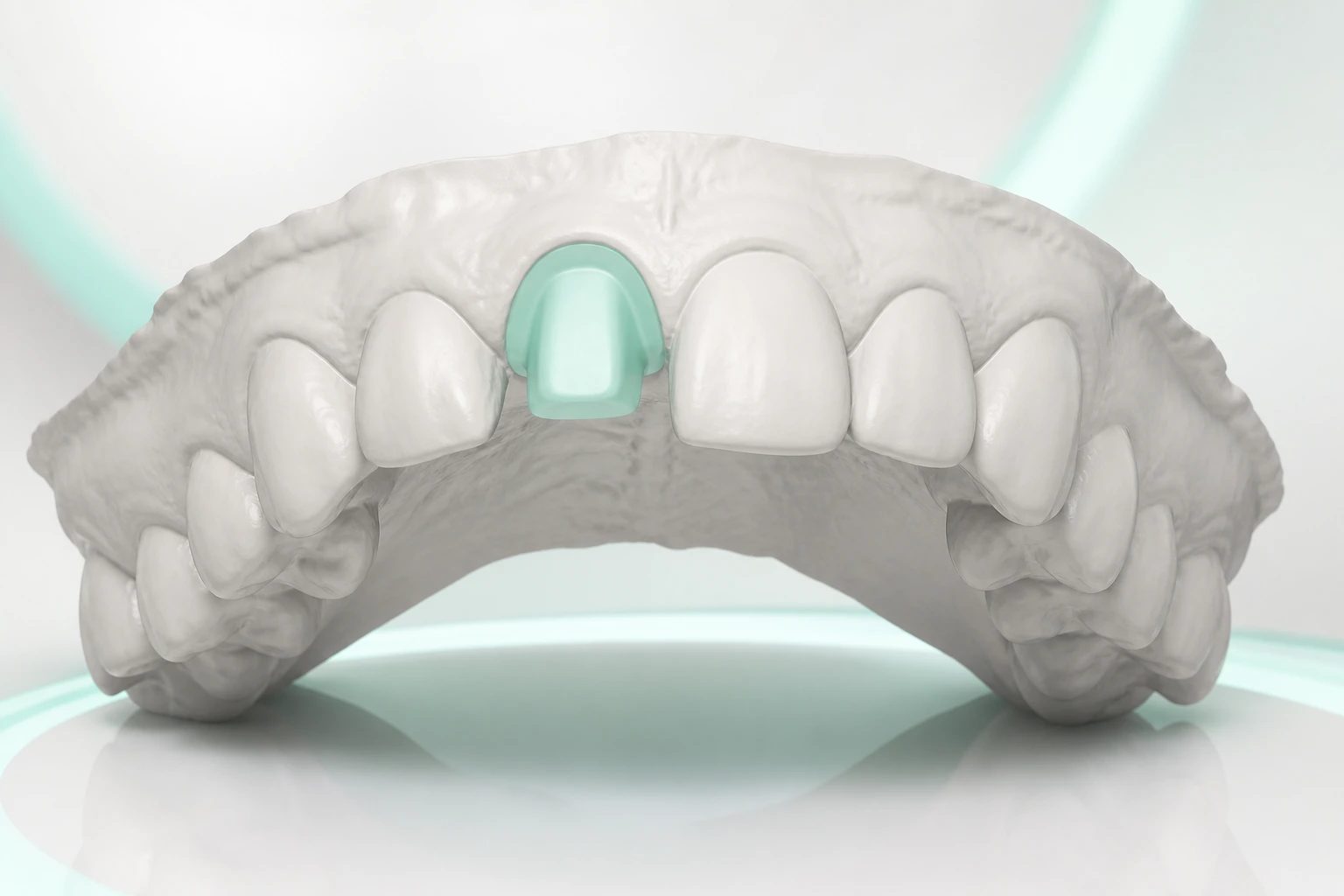
TL-8246 opens the received maxillary arch scan. FDI 11 is prepared; a crown does not yet exist inside that file.
ONE CASE · SEVERAL GEOMETRIES
TL-8246 retains patient, FDI 11, and treatment while distinguishing the received maxillary capture, the proposed crown, and any mesh used as reference or comparison.
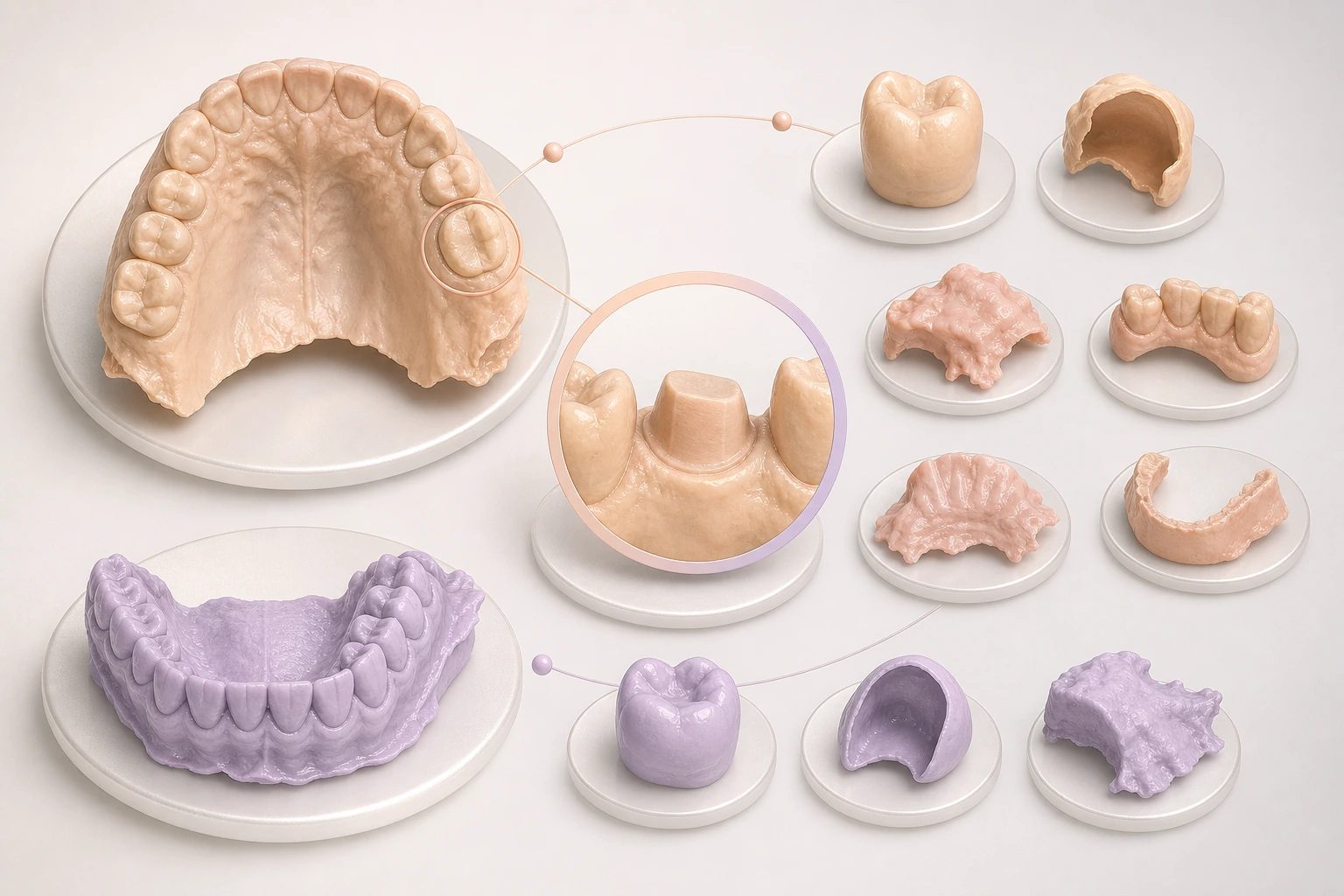
One clinical identity can relate different files without pretending they are the same mesh.
INTEGRITY BEFORE INTERPRETING
The analyzer can localize mesh conditions and retain them with an annotation. It does not turn a boundary, a connection, or a component into a diagnosis or automatic proof of accuracy.

Open boundaries, unexpected connections, separated components, degenerates, normals, and dimensions can return to an observable zone of the file.
The same signal can mean different things depending on the crop and the geometry’s purpose. The analyzer retains evidence; the team interprets.
TWO MESHES · TWO VISIBLE IDENTITIES
A reference must not be mixed with the received scan or the comparison mesh. Tolerance and deviation orient the review; acceptance stays with the team.
 EDITORIAL REFERENCE · TL-8246
The reference retains file, case, and purpose. It is not presented as if it were the received clinical scan.
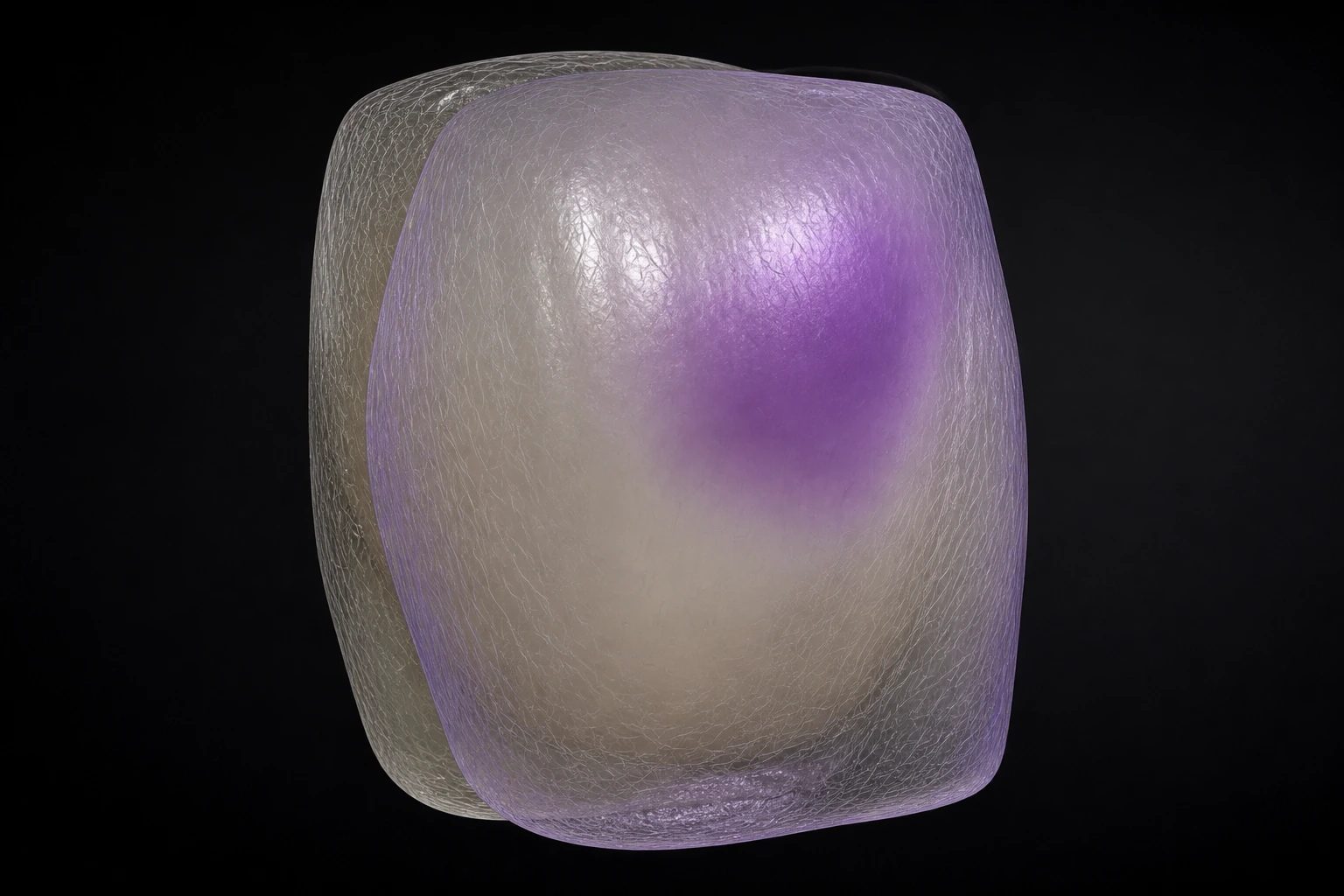 EDITORIAL OVERLAY · FDI 11
Both meshes correspond to the same FDI 11 design. The visualization localizes differences; it does not register automatically or decide whether they are acceptable.
PREFLIGHT · EXCEPTION · QA GATE
The technical result describes the file. The exception retains the reason and co-signature when required. The QA gate checks separately whether production can open.

Pass, with warnings, or blocked describes the geometric analysis of an identified file. It is not yet a release signature.
File + checks + resultFROM FILE TO CASE MEMORY
Value is not a final capture. It is being able to return to TL-8246 and reconstruct file, region, review, exception, and gate without separating technique from context.

Memory begins before the analysis.
The clinical geometry keeps its origin identity.
ACTIVE DESIGNFDI 11 crownSection and observation belong to the restorative artifact.
DOCUMENTEDPreflight or exceptionThe original result remains visible.
CONTROLLEDQA gateProduction receives a separate decision.
VERIFIED CAPABILITY · VISIBLE LIMIT
The route explains what the local analyzer does and what needs validation before publication, deployment, or use as a production control.
| Area | Behavior verified locally | Boundary that must remain |
|---|---|---|
| STL, OBJ, and PLY | Open, orient, and inspect compatible geometry in the canonical tool. | The extension does not prove scale, topology, color, or CAD readiness. |
| 3MF, VTK, and VTP | Local import and analysis flows contemplated by the tool. | Practical availability depends on content and the approved configuration. |
| Scanner packages | Identify 3D files alongside photographs, PDFs, and DICOM to organize the record. | Does not equal universal compatibility with manufacturers, versions, or proprietary formats. |
| Geometric integrity | Review boundaries, components, non-manifold relations, degenerates, normals, and dimensions. | These are technical signals; they do not prove intraoral accuracy, fit, or clinical indication. |
| Measurement and comparison | Retain section, points, annotation, capture, reference, comparison, and chosen tolerance. | A person interprets the result; color does not decide whether a deviation is acceptable. |
| Preflight and production | Persist state, exception, and co-signature; a local QA gate can require signed analysis. | Activation, policy, owners, and commercial availability require confirmation. |
TrazaLab does not promise automatic repair of every mesh, CAD-ready output, guaranteed fit, guaranteed fabrication, certified clinical precision, automatic segmentation, or universal scanner compatibility.
DENTAL STL ANALYSIS QUESTIONS
Visible answers on received files, designs, integrity, measurement, comparison, preflight, exceptions, and the production QA gate.
An isolated viewer lets you orient a mesh and inspect its surface. TrazaLab’s flow relates that inspection to the case that explains why the file exists. In synthetic case TL-8246, the received maxillary scan belongs to FDI 11 and a definitive tooth-supported crown. The review can retain the active file, the view used, a measurement, an annotation, a capture, and the preflight result. Afterward, the decision can return to the same clinical identity instead of being reduced to a capture sent on another channel. That continuity does not mean the software diagnoses, certifies clinical accuracy, or decides to fabricate: it organizes the technical review and preserves context so authorized people interpret the finding and execute the next step.
Because they answer different questions. The received scan describes the captured geometry of the arch and the FDI 11 preparation; it does not contain a designed crown by itself. The design prepared afterward represents a restorative proposal on that preparation and must keep its own file identity. Mixing them visually or calling them one mesh would hide what the laboratory received and what the design process added. TrazaLab can keep that relationship explicit so the reviewer knows which is the reference, which is the proposal, and which version was examined. Images on this page are editorial visualizations of the concept; they are not files from a real patient and are not a claim that a design is clinically correct, fabricable, or approved.
The local analyzer contemplates signals such as open boundaries, disconnected components, non-manifold relations, degenerate triangles, normals, duplicates, dimensions, and other geometric properties available in the file. A signal can localize a region that deserves review and remain related to an annotation or capture. Its meaning depends on the file’s purpose: an open boundary may be expected in a crop and problematic in another geometry. That is why TrazaLab does not turn every signal into a clinical conclusion or promise to repair the mesh automatically. Preflight documents what was observed and preserves the review state. Scan accuracy, restoration fit, clinical indication, and readiness for CAD or fabrication require professional evaluation and, when applicable, the manufacturer’s specific tools.
The reviewer can orient the file, switch between surface and wireframe, select points, open a section, and record an observation on a concrete region. Local tools contemplate measurements such as distance, angle, or thickness, plus captures and persistent annotations. The result keeps more value when it stays linked to the active file, the case, and the review that produced it. A measurement depends on the scale, structure, and integrity of the received file; it must not be read as metrological certification or automatic proof of intraoral precision. This page represents the principle with synthetic geometry and editorial states. Exact availability of each tool, export, and format must be confirmed in the approved environment before publishing the route or treating it as a production requirement.
It means naming a reference and a comparison, overlaying them, and examining where they diverge with a tolerance selected by the user. The reference may be a design or a previously accepted geometry; the comparison may be a later version or a try-in file. Color and contour help direct attention, but they do not decide whether the deviation is acceptable. The team must know which files it compared, which alignment it used, and which criterion it documented. On this page, the two editorial meshes correspond to the same prior FDI 11 design and start from already corresponding coordinates. The visualization does not imply automatic registration, does not decide whether a difference is acceptable, and does not confuse the design with the received clinical scan.
The canonical local tool contemplates workflows with STL, OBJ, PLY, 3MF, VTK, and VTP. The package importer can also identify 3D files alongside photographs, PDFs, and DICOM studies so the team can decide which elements belong to the record. Recognizing an extension does not guarantee that the file has usable scale, structure, color, topology, or content. It also does not prove universal compatibility with every scanner, software version, or proprietary container. The responsible way to evaluate a deployment is to test representative packages from the real environment, confirm which files are recognized, review how they relate to the treatment, and document any conversion or manufacturer-specific path before relying on it in production.
The original technical result must remain visible. An exception can retain the laboratory’s justification and, when the approved configuration requires it, a surgeon co-signature. That path does not repair the mesh, does not erase the finding, and does not make the file clinically correct. Its function is to document why an authorized person proposes continuing despite a blocking state and who shared that responsibility. Preflight, documented exception, and co-signature form the exception record; they are not synonyms for a production release already signed. Availability, rules, and authorized people depend on the configuration approved for the environment. Confirm final parity of that behavior in the approved environment before relying on it as a production control.
Preflight records the geometric analysis state. A documented exception can add a reason and a co-signature when the configured flow requires it. The production QA gate is a separate layer: it checks whether the signed analysis the policy requires exists and keeps fabrication locked when it is missing or when the result does not allow release. That is why an exception co-signature must not be presented as if it were, by itself, the QA signature that opens production. Gate and persistence capability are verified locally, but activation, policy, and commercial availability still require confirmation. TrazaLab does not promise fit, printing, milling, or clinical outcome; it retains which file was reviewed, which state it produced, which exception was documented, and which decision authorized or stopped the next step.
FREE BROWSER TOOLS
Start in the browser without an account. TrazaLab keeps the mesh or series tied to prescription, evidence, and send decisions.
Orbit, section plane, wireframe, and mesh inventory in the browser.
Conservative cleanup, reconstructive repair, and signed downloads.
Open edges and bad faces on a Wavefront mesh, with the scan border left open.
Vertex color, open edges, and a cleaned PLY, with the scan border left open.
Axial CBCT review with window/level and declared scale.
ONE REPRESENTATIVE FILE · ONE COMPLETE REVIEW
Case TL-8246 is synthetic; editorial visualization. Confirm admitted formats and the QA gate in your environment before production.