
1. Home
  2. Implant loading advisor

LOADING PROTOCOL · ISQ · TORQUE · MISCH

Immediate loading or conventional?

Enter implant stability, bone density, and patient factors. You get a reference loading protocol with a follow-up timeline — always confirm manufacturer IFU and clinician judgment.

Reference advisor only — not a medical device, not an IFU, and not a diagnosis. Confirm manufacturer IFU and clinician judgment before any loading decision. TrazaLab is case-coordination software for remake prevention.
INPUTSISQ · Torque · D1–D4 · Risks
JOBReference protocol → case note
TrazaLabLoading advisor Immediate loadingReady
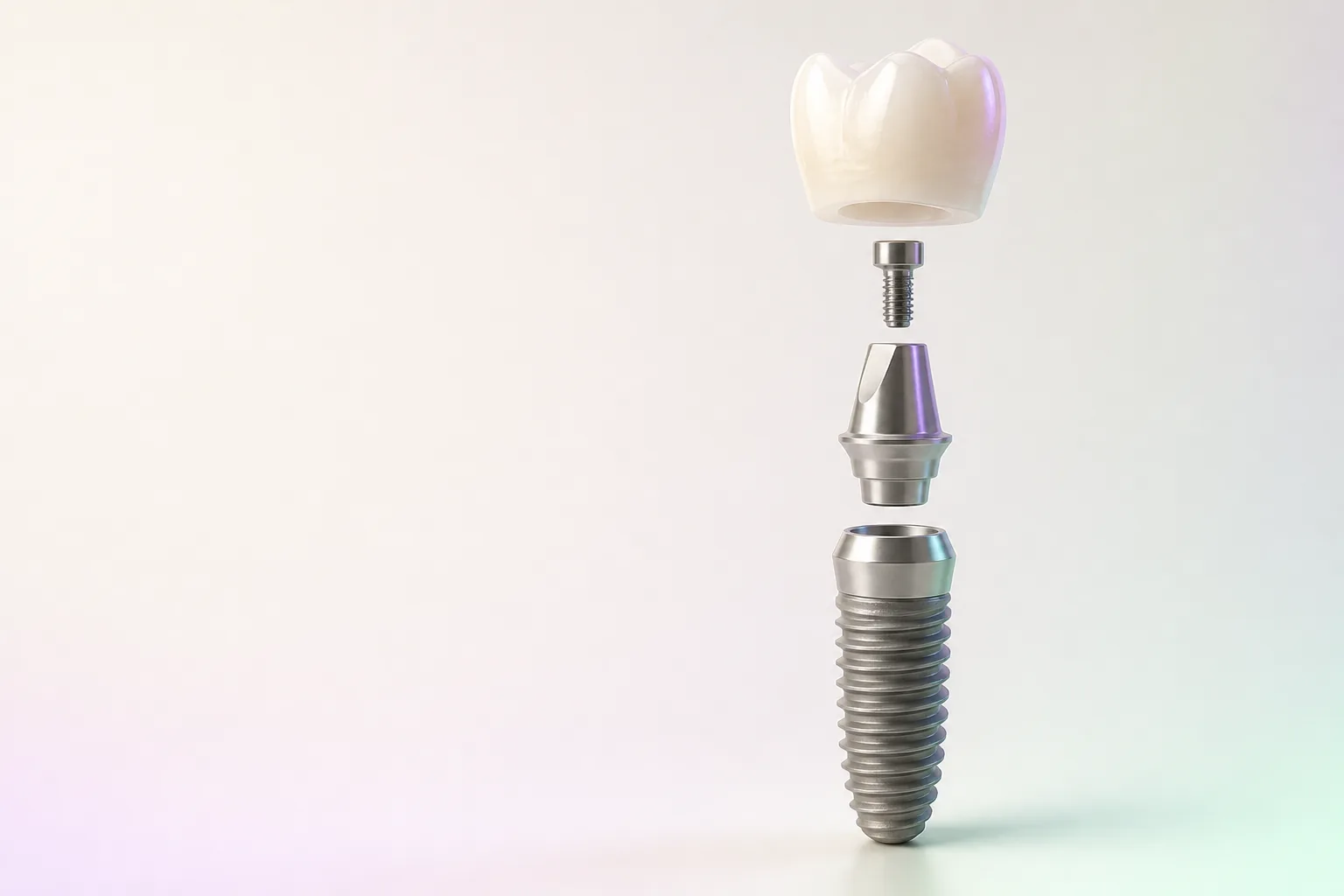
EDITORIAL VISUALIZATION
IMPLANT DATA
PATIENT RISK FACTORS

Reference advisor only — not a medical device, not an IFU, and not a diagnosis. Confirm manufacturer IFU and clinician judgment before any loading decision. TrazaLab is case-coordination software for remake prevention.

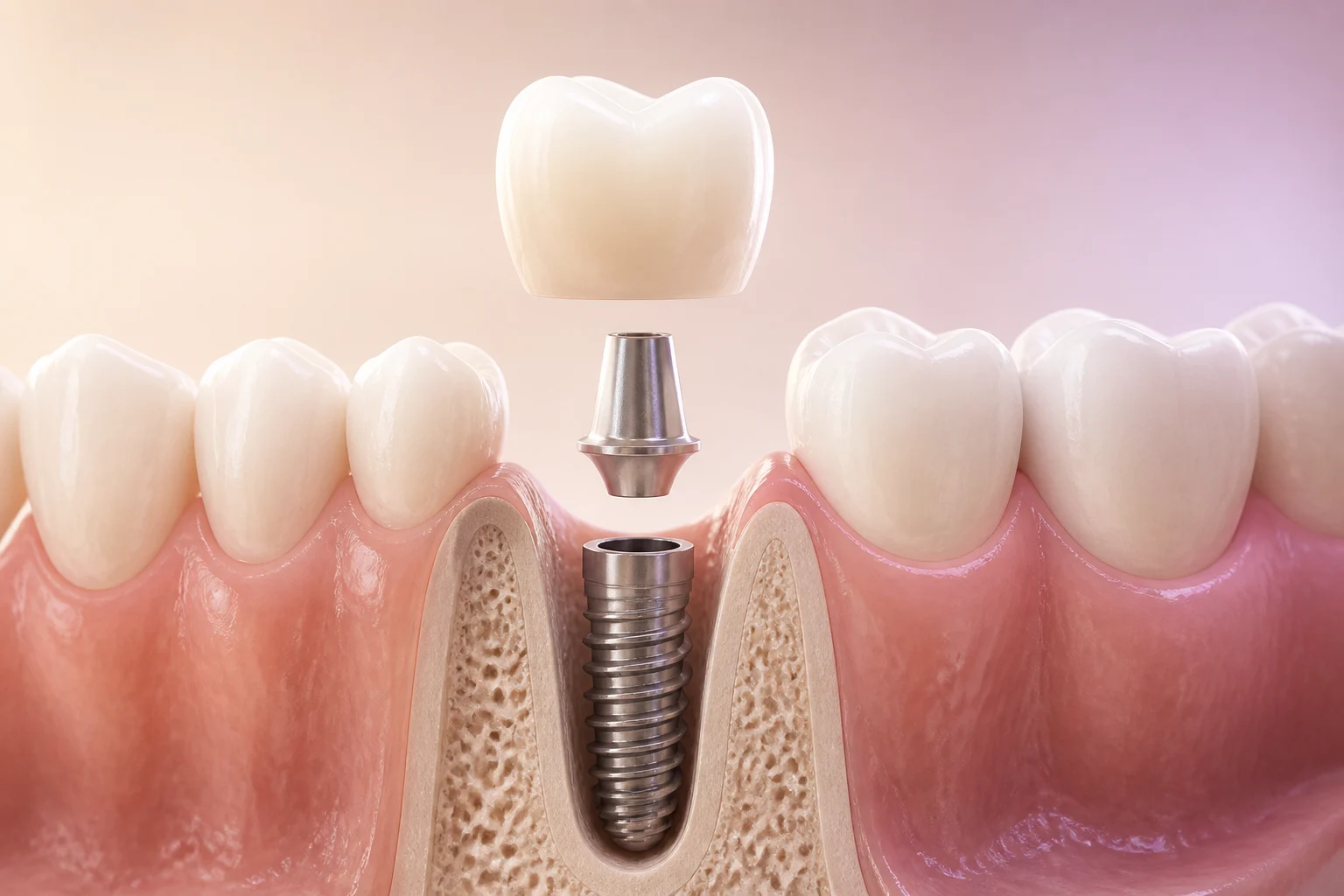
EDITORIAL VISUALIZATION

WHY IT MATTERS

A mistimed immediate load means implant failure.

When to load an implant is the most consequential post-op call. Load too early under unfavorable conditions and you get micromotion, fibrous tissue instead of bone, and implant loss. Load too late and the patient waits for nothing — while the case still needs a documented protocol note the lab and clinic can share.

Reference table

Implant loading advisor

Source: live TrazaLab loading-advisor pages. Instrument logic uses this table — not the essay “65+” KPI alone.

ProtocolMin ISQMin torqueIdeal boneTime
Immediate loading> 70> 35 NcmD1 — D2< 48h
Early loading60 — 7025 — 35 NcmD2 — D36–8 wk
Conventional loading< 60< 25 NcmD3 — D43–6 months

WHY TIMING MATTERS

A mistimed immediate load means implant failure.

When to load an implant is the most consequential call of the post-op period. Load too early under unfavorable conditions and you get micromotion, fibrous tissue instead of bone, and implant loss. Load too late and the patient waits for nothing while the clinic–lab case still lacks a clear protocol note.

This Theme page elevates TrazaLab’s live implant loading advisor into the pearl MarketingShell. It is a reference advisor built from the on-page reference table on trazalab.com/implant-loading-advisor.html (and the ES/PT twins). It is not a medical device, not an IFU, and not a diagnosis.

TrazaLab’s commercial job is remake prevention through connected case coordination: prescription language, evidence, files, and decisions stay on one case. A loading-protocol note belongs beside implant system, abutment compatibility, and torque documentation — not as a substitute for manufacturer instructions.

Use the instrument to draft a reference recommendation from measured ISQ, insertion torque, Misch bone density, site location, and selected risk factors. Then confirm the manufacturer IFU and clinician judgment before anyone treats the output as a clinical order.

The essay below restates claim-safe narrative already published on the live loading-advisor pages. Where the essay mentions an ISQ “65+” clinical consensus story, treat it as longform context only. The instrument recommendation logic follows the live reference table thresholds, not the essay KPI alone.

If you need brand-specific abutment screw torque or connection family, leave this page and open the implant-torque hub or the implant-compatibility checker. Loading timing, torque values, and connection identity are adjacent chapters of the same remake-prevention story.

REFERENCE TABLE

The on-page table is the instrument source of truth.

The live reference table publishes three protocols. Immediate: ISQ greater than 70, insertion torque greater than 35 Ncm, ideal bone D1–D2, time window under 48 hours. Early: ISQ 60–70 (instrument gate ≥60), torque 25–35 Ncm (instrument gate ≥25), ideal bone D2–D3, time window 6–8 weeks. Conventional: ISQ under 60, torque under 25 Ncm, ideal bone D3–D4, time window 3–6 months.

Those numbers are listed in content/implant-loading/claim-table.ts with an explicit CLAIM_TABLE comment. Do not invent manufacturer-specific loading IFU values on this page. Brand torque pages and catalogs remain the place for component IFU numbers.

The Theme instrument implements a hard, transparent rule set derived from that table: Immediate only when ISQ > 70 and torque > 35 Ncm and bone in D1–D2 and no risk checkboxes are selected. Otherwise Early when ISQ ≥ 60 and torque ≥ 25 Ncm. Otherwise Conventional. Any selected risk factor never yields Immediate.

Location (Anterior / Premolar / Molar) is collected because it appears on the live instrument and helps the case note. It does not change the Theme table-advisor protocol branch. Bone density still gates Immediate via the D1–D2 ideal band.

The live dark-tool HTML also embeds an older score-based script. This elevation does not silently re-ship that score engine. The published table is clearer for YMYL review and matches the user-approved PROPOSED reference-advisor logic.

Always show the hard disclaimer near the instrument and near the result: TrazaLab is case-coordination software; confirm IFU and clinician judgment before acting.

ISQ / OSSTELL

ISQ measures interface stiffness — the table still uses >70 for Immediate.

An ISQ (Implant Stability Quotient) measured by resonance frequency analysis is one of two objective primary-stability signals on this advisor, alongside insertion torque. The live essay KPI states that an ISQ of 65 or higher is a widely cited clinical narrative threshold for considering immediate loading. That 65 figure appears in longform and FAQ narrative on the live pages.

The live reference table, however, lists Immediate at ISQ greater than 70. This Theme instrument follows the table for recommendation logic so the calculator and the printed table do not contradict each other. Mention 65 only as live-page narrative context, not as a second competing instrument gate.

Below the table’s Immediate band, the risk of excessive micromotion rises in the live-page storytelling. The mistakes section notes that an ISQ around 60 can feel stable in the moment yet still signal an interface that is not rigid enough for functional forces, with micromotion language (>150 microns) appearing on the live page as essay context.

ISQ and torque are complementary. High torque with low ISQ can mean thin cortical bone over soft trabecular bone — a pairing the live methodology section already describes. Enter both values before trusting any Immediate suggestion.

Re-measure later. The live mistakes section describes a stability dip between weeks 3 and 5 and recommends re-evaluating ISQ at 6–8 weeks. Capture those later readings on the same case record so the laboratory and surgeon share one timeline.

Osstell is named on the live instrument label as the ISQ context. Do not invent competing RFA device claims or diagnostic accuracy percentages on this page.

INSERTION TORQUE

35 Ncm is the Immediate table gate — brand IFU still wins.

Insertion torque in Ncm measures rotational resistance at placement. The live reference table sets Immediate above 35 Ncm and Early in the 25–35 Ncm band (Theme Early gate ≥25). Conventional sits under 25 Ncm on the table.

The live essay also says torque of at least 35 Ncm signals primary stability sufficient to tolerate early or immediate loading in that narrative, and that torque below 20 Ncm points toward delayed conventional loading. The 20 Ncm figure is essay-only on this elevation; instrument branching still uses the table’s 25 / 35 gates.

Do not confuse insertion torque with abutment screw torque. Brand-specific screw torque belongs on the implant-torque family pages, quoted from manufacturer documentation. This advisor does not invent per-brand loading IFUs.

Record the insertion-torque number on the case with the same discipline you use for Digital Rx fields. An undocumented “it felt tight” comment is how remake arguments start when the restoration fails later.

If torque is high but ISQ is low — or the reverse — read both signals before choosing Immediate. The live methodology already warns that the two measures can diverge when cortical and trabecular bone disagree.

When risk factors are selected, Theme never recommends Immediate even if torque clears 35 Ncm. Prefer Early or Conventional and confirm IFU / clinician judgment.

MISCH BONE DENSITY

D1–D4 labels match the live instrument — Immediate needs D1–D2.

The Misch classification on the live page runs D1 dense cortical, D2 porous cortical plus dense trabecular, D3 thin cortical plus trabecular, and D4 fine trabecular low density. Those exact label families are reused in the Theme instrument.

D1 and D2 are the Immediate ideal bone band on the reference table. D3 requires careful evaluation in the live methodology language. D4 generally requires longer delayed loading in that narrative (live text mentions 4–6 months in places) while the table’s Conventional window remains 3–6 months.

Site stories on the live page associate denser bone with anterior mandible patterns and looser bone with posterior maxilla patterns. That is essay context for why location and bone both appear on the form — not a separate automated rule that overrides the table.

Theme Immediate requires bone in D1–D2 in addition to ISQ and torque gates. Clearing ISQ >70 and torque >35 with D3 or D4 does not unlock Immediate here.

Keep bone density as a typed case field. Vague “soft bone” comments without a Misch letter create the same remake fog as missing shade or missing FDI selection.

Cross-link to compatibility and torque hubs when the restorative plan depends on a specific implant–abutment stack in challenging bone.

PATIENT RISK FACTORS

Any checked risk blocks Immediate in this reference advisor.

The live instrument lists six risk checkboxes: Smoker, Diabetic, Bisphosphonates, Radiotherapy, Bruxism, and Periodontal disease. Theme keeps the same six.

Live methodology language says smoking reduces vascularization and delays osseointegration; uncontrolled diabetes (HbA1c >7% appears on the live page) compromises healing; bisphosphonates raise osteonecrosis risk; bruxism multiplies forces on the implant; each risk pushes protocols toward more conservative waiting times.

Theme hard rule: if any risk is selected, never recommend Immediate. Prefer Early when ISQ and torque still clear the Early gates, otherwise Conventional, and always attach a confirm-IFU / clinician-judgment note.

Risk notes shown under the result are adapted from the live calculate() strings and labeled as live-page notes so they are not mistaken for new TrazaLab clinical inventions.

Do not turn risk checkboxes into a scored “failure probability” meter. This elevation deliberately avoids inventing percentage outcome claims beyond what the live page already publishes.

Document which risks were considered on the case. A missing risk conversation is another remake-prevention gap when loading timing is later disputed.

LOADING PROTOCOLS

Immediate, early, and conventional — defined as on the live page.

Live methodology defines Immediate as functional restoration within 48 hours of placement; Early as between 1 week and 2 months; Conventional as 3–6 months; and Delayed as more than 6 months for simultaneous bone-augmentation cases. The Theme table advisor surfaces Immediate, Early, and Conventional with the table time windows.

Follow-up timeline steps shown after evaluation reuse the live calculate() timelines for each protocol class. They are reference reminders, not a prescribed medical schedule.

Full-arch immediate loading is called out on the live mistakes section as a different problem from single-unit Immediate with a good ISQ: force distribution, splinting, and the cost of losing one implant that compromises the whole plan differ. Theme does not invent a separate full-arch calculator here.

Early is the bridge when primary stability is good but not enough for Immediate, or when risk factors force a more conservative read while ISQ/torque still clear Early gates.

Conventional is the default else branch when Immediate and Early gates fail. It is also the safer Theme output when inputs are incomplete — the instrument requires both ISQ and torque before recommending.

Write the chosen protocol name, numbers, and IFU-confirm status onto the case. TrazaLab keeps that note connected; it does not authorize the load.

COMMON MISTAKES

Five loading-decision mistakes already named on the live page.

The live page lists five mistakes that compromise implants without showing up immediately: Immediate loading with ISQ under 65 (essay threshold language); ignoring patient risk factors; using the same protocol for maxilla and mandible; not re-evaluating at 6–8 weeks; and immediately loading multiple units as if they were a single favorable unit.

Those mistakes are restated here as claim-safe education tied to the live source. Theme’s instrument already hard-blocks Immediate when risks are selected, which directly addresses the “ignore risk factors” failure mode.

Maxilla versus mandible differences appear in live essay language about D3–D4 posterior maxilla versus D1–D2 anterior mandible. Capture location and bone honestly; do not pretend one protocol fits every site.

Stability dip language (weeks 3–5) and the 6–8 week ISQ re-check are live-page reminders to keep secondary stability on the case timeline.

Multi-unit / full-arch caution remains clinician judgment. This advisor does not output a full-arch Immediate clearance.

Every mistake chapter ends the same way: document the call, confirm IFU, and keep the note on the connected TrazaLab case.

CASE COORDINATION

TrazaLab coordinates the case — it does not authorize the load.

TrazaLab is dental SaaS for remake prevention and clinic–lab case coordination. Public pages must say which remake risk a software action addresses. Here the risk is a mistimed loading protocol that is never written into the shared case language.

Keep ISQ, torque, bone, location, risks, and the reference protocol beside Digital Rx fields, odontogram selection, and evidence lanes. When the laboratory asks why a provisional was planned at 48 hours versus 8 weeks, the answer should be a document, not a hallway memory.

Cross-link the implant-torque hub for brand screw values and the implant-compatibility hub for connection families. Loading timing without connection identity is an incomplete implant chapter.

Do not present this advisor as HIPAA certification, diagnostic device clearance, or guaranteed osseointegration. Those claims are out of evidence.

Synthetic example numbers on the marketing mock (for example 68 ISQ / 30 Ncm) are illustrative only and contain no PHI.

Salvador approved index + 308 on 2026-09-12. Theme routes are indexable and listed in the XML sitemap; legacy .html stems permanently redirect to the Theme hubs.

YMYL DISCLAIMER

Not a medical device. Confirm IFU. Clinician judgment wins.

This page is YMYL-sensitive. Every numeric threshold used by the instrument is listed in the CLAIM_TABLE. Essay-only numbers such as ISQ 65, torque 20 Ncm, micromotion 150 microns, smoker healing add-on weeks, and bisphosphonate duration notes stay in longform/FAQ and do not silently change the calculator.

Healthcare professionals remain responsible for diagnosis, surgical decisions, loading authorization, and patient-specific risk management. TrazaLab does not practice dentistry.

Manufacturer IFUs and catalogs override any reference advisor output for the component and lot in hand.

Do not add SoftwareApplication or HealthApplication schema that oversells a static reference guide as a regulated medical device.

Registry status for the Theme routes is indexable after Salvador’s 2026-09-12 Wave C visual, claim, and index + 308 approval.

If a future change needs a new numeric gate, update CLAIM_TABLE first with a live-page or IFU citation — never invent a threshold to “finish the task.”

PRIMARY STABILITY

Torque and ISQ are complementary — enter both.

Primary stability is measured two ways on the live methodology: insertion torque (Ncm) and resonance frequency analysis (ISQ). Torque measures resistance to rotation at placement. ISQ measures stiffness of the implant–bone interface through vibration.

They are complementary: high torque with low ISQ can mean thin cortical over soft trabecular bone. Theme therefore requires both numbers before emitting a reference protocol.

Primary (mechanical) stability falls during early healing while secondary (biological) stability rises. The live mistakes section places the lowest point of that curve between weeks 3 and 5.

Waiting through the dip before loading is often the remake-prevention move when Immediate gates are not met. Early’s 6–8 week window on the table aligns with re-check language on the live page.

Write both placement-day and follow-up ISQ values onto the case when they exist. A single heroic placement ISQ without a later reading is a thin evidence pack.

TrazaLab’s job is to keep those readings attached to the same case thread the laboratory will open months later.

FAQ CONTEXT

Live FAQ answers stay claim-bound to the published page.

Live FAQ topics include safe ISQ for immediate loading, Immediate loading in D4 bone, extra healing time for smokers, bisphosphonate considerations, and the difference between early and delayed loading. Theme FAQs restate those topics with hard disclaimers and table-first instrument language.

The live FAQ says clinical consensus often cites ISQ 65+ under ideal conditions, while many clinicians prefer 70+ when risks are present, and ISQ under 60 means delayed conventional without exceptions in that narrative. Theme instrument Immediate still requires table >70 plus torque, bone, and no risks.

D4 Immediate is described on the live FAQ as possible but high-risk; low torque and low ISQ push delayed loading at 4–6 months in that narrative. Theme will not suggest Immediate for D3/D4 because of the D1–D2 ideal-bone gate.

Smoker FAQ add-on weeks (2–4 light, 4–8 heavy) and quit windows (2 weeks before / 8 weeks after) remain essay/FAQ only.

Bisphosphonate FAQ language about oral use beyond 3 years or IV exposure, osteonecrosis risk, extended protocols, and physician coordination remains essay/FAQ only.

Early versus delayed distinctions follow the live FAQ: Early between 1 week and 2 months; delayed after 3–6 months for low primary stability, high risks, or simultaneous augmentation.

CASE NOTE DISCIPLINE

Write the reference protocol before the provisional leaves the chair.

A loading decision that lives only in the surgeon’s head is a remake risk when the laboratory later asks why a provisional was planned at forty-eight hours versus eight weeks. Put the reference protocol, ISQ, torque, bone letter, location, and risk checklist on the same case the Digital Rx already carries.

TrazaLab’s remake-prevention promise is continuity of evidence and responsibility across clinic and laboratory steps. This advisor drafts the timing note; the IFU and clinician still authorize the load.

If brand screw torque or connection family is still unknown, open the implant-torque and implant-compatibility hubs before the abutment design is frozen. Timing without connection identity is an incomplete implant chapter.

CASE RECORD

Loading intent belongs on the same case as torque and connection.

Use this advisor as a reference note, then keep implant system, abutment compatibility, and insertion-torque documentation beside the Digital Rx. TrazaLab coordinates the case — it does not replace the IFU.

TrazaLabLoading note on the caseReady
LOADING NOTE ON THE CASE
PROTOCOL (REF.)Early · 6–8 wk
ISQ / TORQUE68 / 30 Ncm
BONE / SITED2 · Premolar
IFU CHECKPending clinician

Reference advisor only — not a medical device, not an IFU, and not a diagnosis. Confirm manufacturer IFU and clinician judgment before any loading decision. TrazaLab is case-coordination software for remake prevention.

FAQ

What surgeons ask about loading timing.

Reference advisor only — not a medical device, not an IFU, and not a diagnosis. Confirm manufacturer IFU and clinician judgment before any loading decision. TrazaLab is case-coordination software for remake prevention.

01What ISQ is safe for immediate loading?+

Live-page FAQ narrative cites clinical consensus around ISQ 65+ under ideal conditions, with many clinicians preferring 70+ when risks are present, and ISQ under 60 pointing to delayed conventional loading in that narrative. This Theme instrument’s Immediate recommendation follows the on-page reference table: ISQ > 70, torque > 35 Ncm, bone D1–D2, and no selected risk factors — then confirm IFU and clinician judgment. TrazaLab is not a medical device.

02Can you immediately load in D4 bone?+

Live FAQ: possible but high-risk; if insertion torque is below 25 Ncm and ISQ below 60, delayed loading at 4–6 months is described as the safer call in that narrative. Theme’s table advisor will not recommend Immediate when bone is outside D1–D2. Confirm IFU and clinician judgment.

03How much extra healing time does a smoker need?+

Live FAQ narrative suggests adding 2–4 weeks for smokers of fewer than 10 cigarettes a day and 4–8 weeks for heavy smokers, ideally quitting 2 weeks before and 8 weeks after surgery. Those figures are essay/FAQ only and do not change Theme’s Immediate hard-block when Smoker is checked. Confirm IFU and clinician judgment.

04What special considerations apply to bisphosphonate patients?+

Live FAQ notes bisphosphonates reduce bone turnover needed for osseointegration; oral use beyond 3 years or IV exposure carries osteonecrosis risk language on the page, with extended protocols and physician coordination. Theme blocks Immediate when Bisphosphonates is selected. Confirm IFU and treating physician.

05What is the difference between early and delayed loading?+

Live FAQ: Early is functional restoration between 1 week and 2 months; delayed/conventional after 3–6 months for low primary stability, high risk factors, or simultaneous bone augmentation. Theme Early uses table gates ISQ ≥ 60 and torque ≥ 25 Ncm when Immediate is not met.

06Is this a medical device or IFU?+

No. It is a reference advisor for clinic–lab case communication. TrazaLab is case-coordination software for remake prevention. Confirm manufacturer IFU and clinician judgment before any loading decision.

NEXT

Protocol named. Case still open.

Keep the reference loading note with Digital Rx evidence, then confirm IFU before anyone treats the output as a clinical order.

Choose the right next step

Start with one case.

Create an account now or walk through a complete case before deciding. Both paths are available today.

Already using TrazaLab? Log in

Choose based on what you need

ACCOUNTStart nowCreate an account through the functioning TrazaLab signup journey.
TOURUnderstand before decidingFollow the complete self-guided case without registration or a sales conversation.
CASECompare it with your flowUse the tour as a guide and activate TrazaLab when the process fits your team.