- Home
- Implant compatibility
IMPLANT COMPATIBILITY · NINE SYSTEMS
Is that abutment for this implant?
Pick the brand and the line. Read the connection family, the platform codes, the listed abutments, and the screw note — then confirm the manufacturer IFU before you design or mill.
Reference guide for connection family and published notes. Confirm the manufacturer catalog and IFU for the component and lot in your hand.
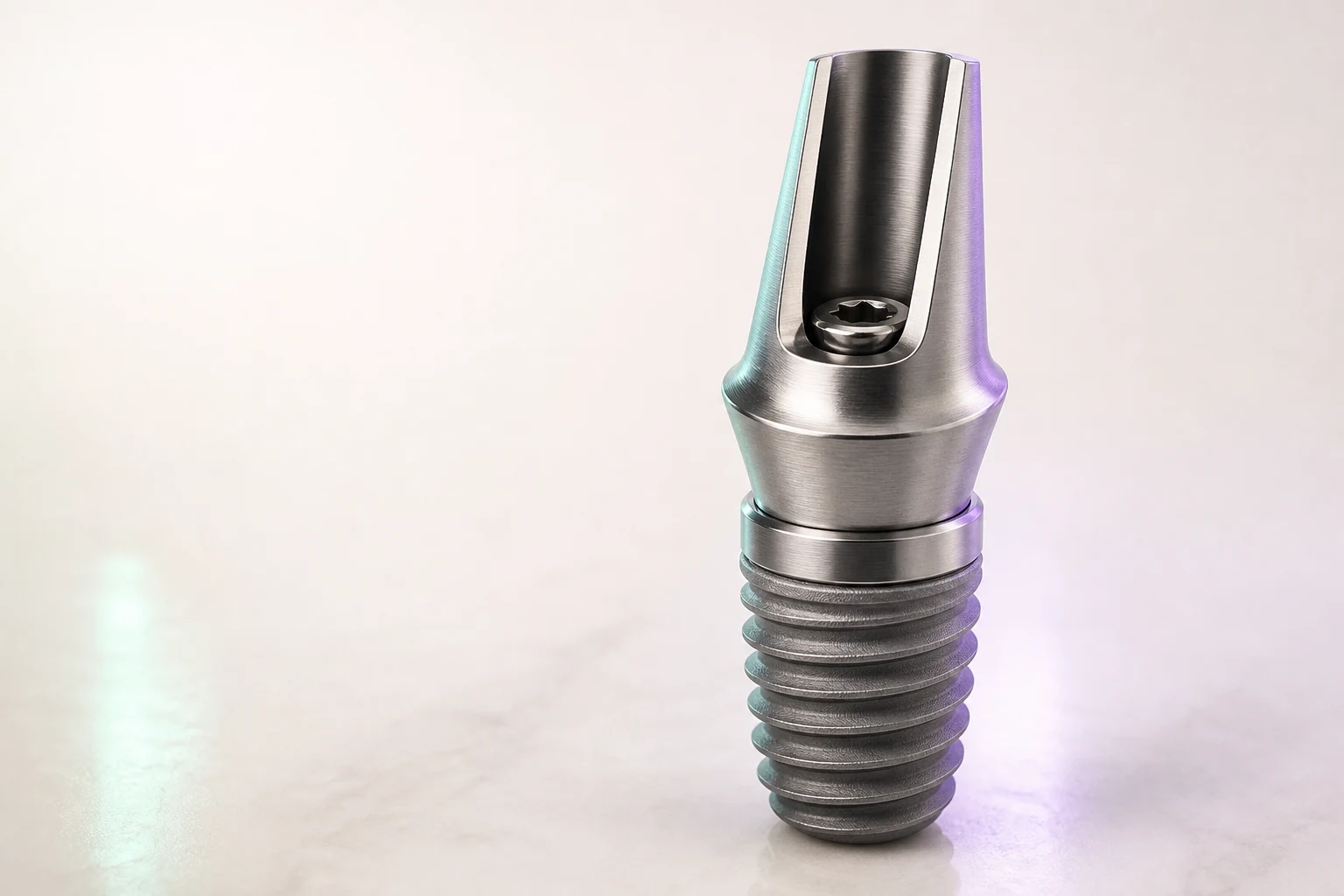
EDITORIAL VISUALIZATIONPublished torque note: 15 Ncm (prosthetic), 35 Ncm (abutment)
Reference notes for OEM Nobel components and Tri-Channel/External Hex connections. Confirm the IFU for any aftermarket part.
- Verify platform (NP/RP/WP) before ordering
- Procera abutments require a specific scanner
- Aftermarket parts do not guarantee passive fit on multi-unit
EDITORIAL VISUALIZATIONWHY THE JOIN MATTERS
A look-alike connection is not the same connection.
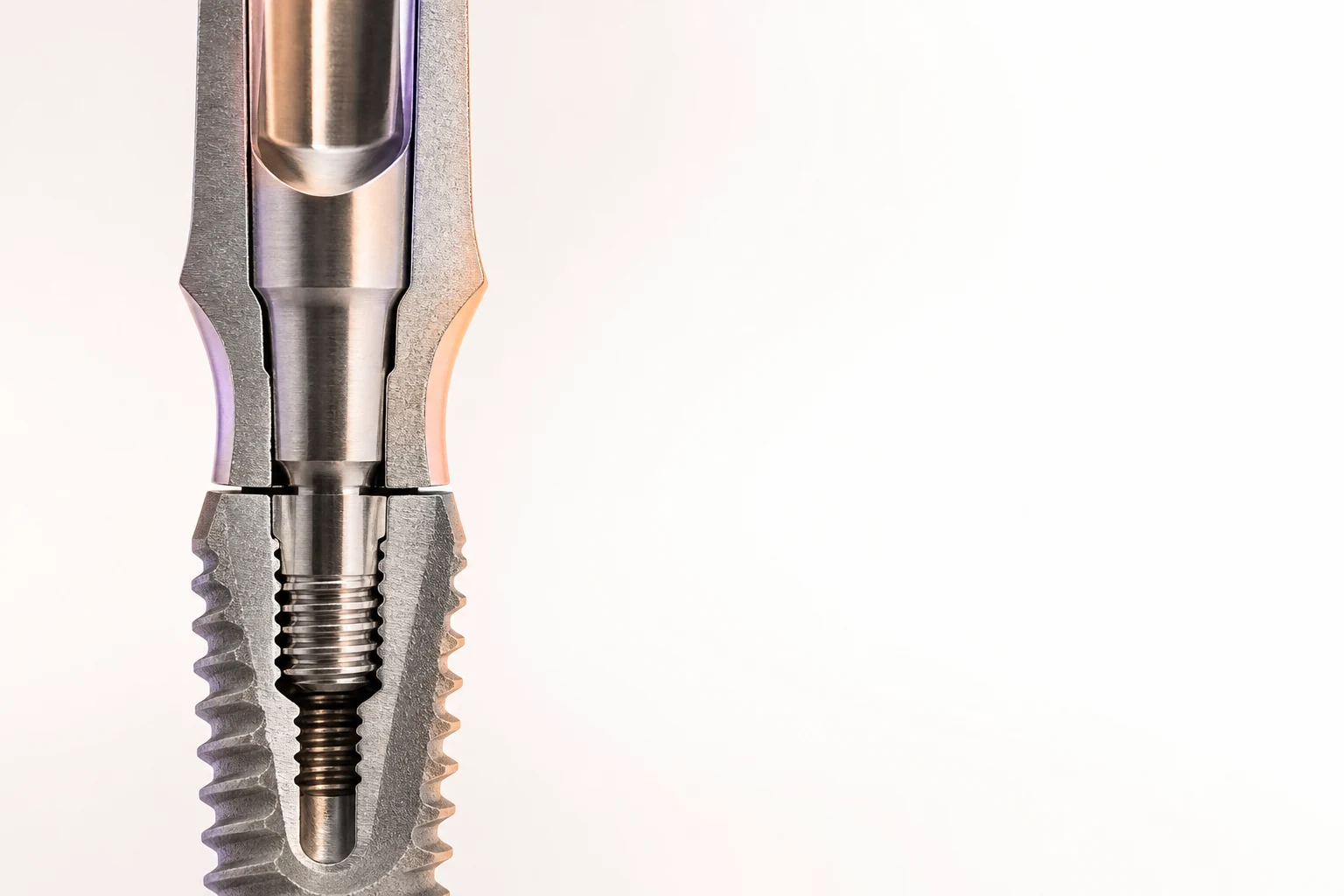
The implant–abutment interface carries the restoration. When the geometry does not match the fixture, the join can leave a gap, lose preload, or force the framework. This page is a reference for the nine systems below — not a substitute for the manufacturer catalog.
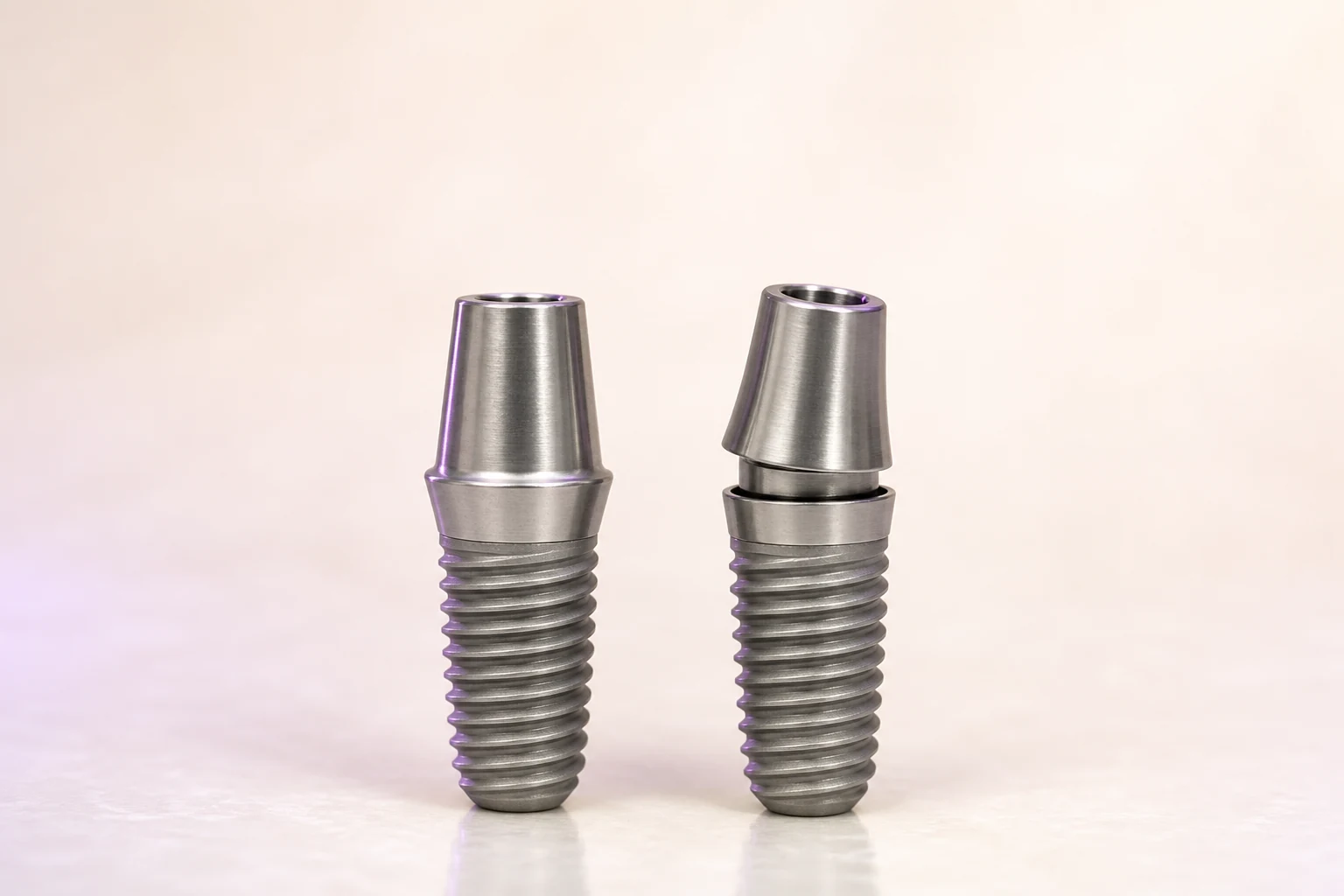
OEM SEAT VS MISMATCH
Flush seat on the left. Proud seat on the right.
If the abutment does not seat flush on the platform, stop and confirm the exact system, platform and component against the manufacturer documentation before you continue.
EDITORIAL VISUALIZATIONCONNECTION FAMILIES
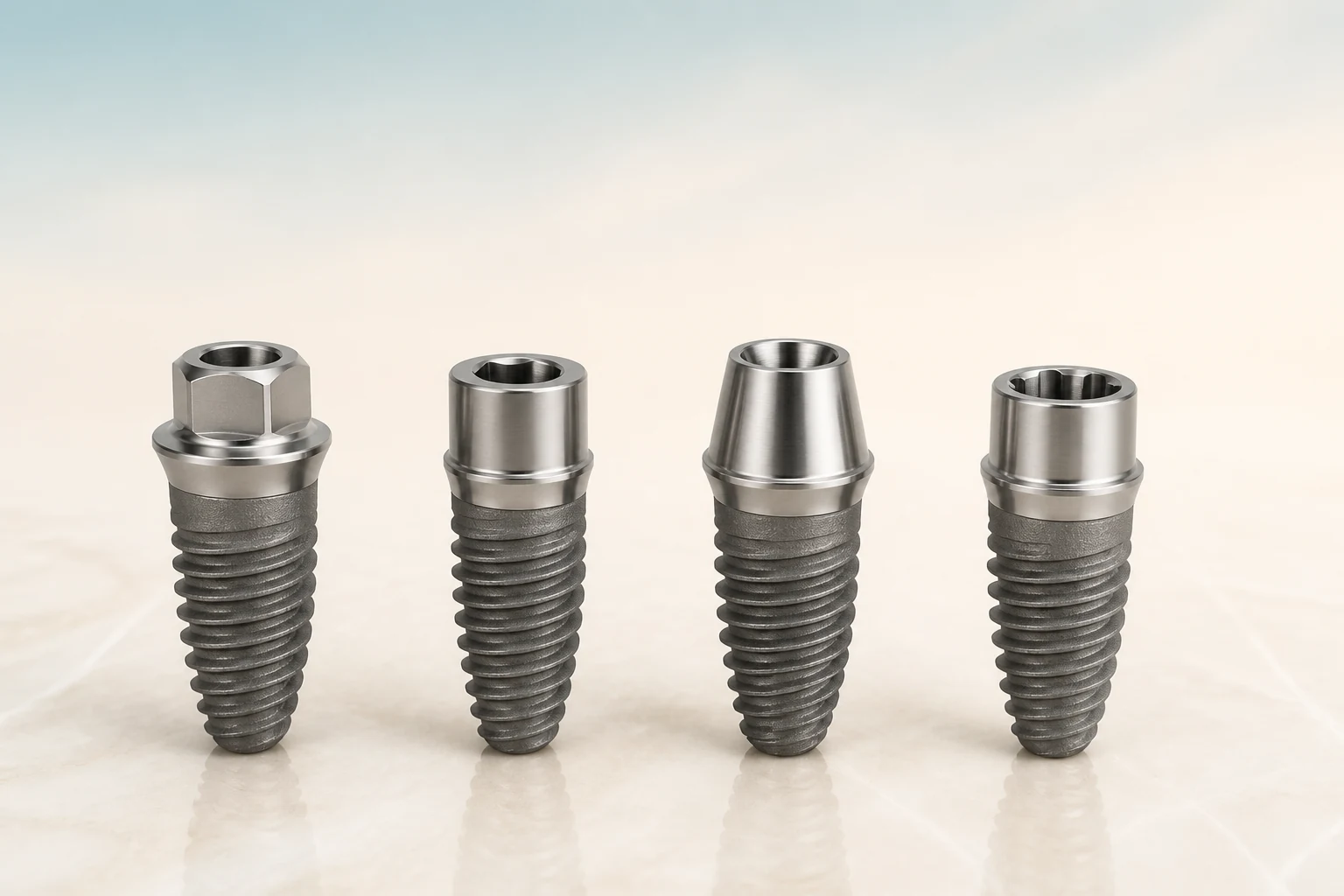
Four geometries clinicians read on a radiograph.
External hex, internal hex, conical / Morse-style taper, and tri-channel internals are families — not universal fits. Channel angle and platform codes stay brand-specific.
EDITORIAL VISUALIZATION- 01External hex
- 02Internal hex
- 03Conical / Morse
- 04Tri-channel
AFTER THE CHECK
The system you confirmed is the system the laboratory should read.
In TrazaLab the implant line on a tooth site keeps implant system and abutment together. It travels into the Digital Rx. An empty implant system on the lab sheet reads as Not on Rx — remake prevention, not decoration.
Keep the implant line in the caseNINE SYSTEMS
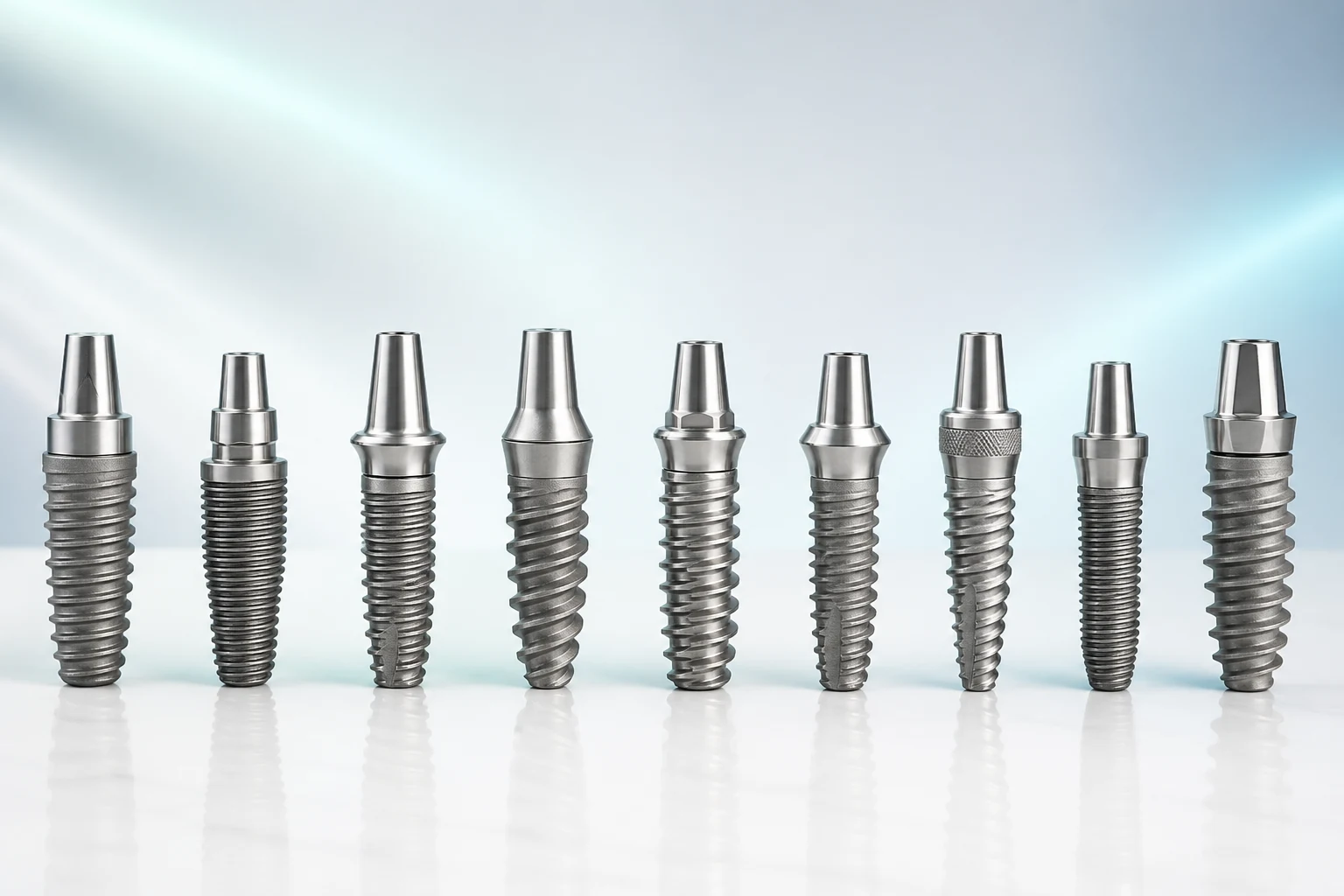
Same checker. Distinct connections.
Each row opens the instrument on that brand. Torque values for the same nine systems live on the implant-torque family.
EDITORIAL VISUALIZATIONReference guide for connection family and published notes. Confirm the manufacturer catalog and IFU for the component and lot in your hand.
QUESTIONS
Asked before the abutment is ordered.
Reference guide for connection family and published notes. Confirm the manufacturer catalog and IFU for the component and lot in your hand.
01Does this tool prove an aftermarket abutment is safe?+
No. It is a reference guide for connection family and published notes on nine systems. Always verify against the manufacturer catalog and clinically before cementation.
02Can I mix brands in the same arch?+
Each implant keeps its own components and scan bodies. On a bar or bridge spanning different brands, use multi-unit abutments from each respective system and confirm passive fit.
03Where do torque numbers live?+
On the TrazaLab implant-torque pages for the same nine brands, quoted from manufacturer documentation with source labels. This checker links you there after you identify the system.
04What if I do not know which implant the patient has?+
Ask for the implant card first. If it is missing, use a high-contrast periapical to read shape, connection cues and threads, then confirm with the treating dentist or the manufacturer identification resources — this page does not identify unknown implants from a radiograph.
05How does this connect to remake prevention?+
An unconfirmed implant system or abutment on the case leaves a gap the laboratory reads as Not on Rx. Recording the line after this check is the product handoff.
VERIFY · THEN RECORD
Read the connection here. Keep it in the case.
TrazaLab holds implant system and abutment on the tooth site, writes them into the Digital Rx, and shows the laboratory exactly what was confirmed — or exactly what was not.