64% of prescriptions are illegible. 80% are incomplete. The technician guesses. The lab calls. Hours are lost. Remakes happen. Digital Rx eliminates all of it.
The doctor scribbles on a generic form. The admin snaps a photo with her phone. WhatsApp compresses it by 98%. The technician opens it and can't tell if it says "A2" or "A3." The occlusion field is blank. No translucency instructions. The implant brand is unreadable.
They call the clinic. The admin doesn't know, looks for the doctor. The doctor is with a patient. Returns the call 3 hours later. "A3, canine guidance, medium translucency." The technician writes it on a sticky note.
2-4 hours a day of your senior technician's time goes to decoding prescriptions. Not producing. Guessing what the doctor meant.
Digital Rx isn't a PDF of the paper prescription. It's a smart form where every field has a purpose and every field is required. You can't send an incomplete prescription.
Material: Visual selector with images. No free text. No "whatever you think is best."
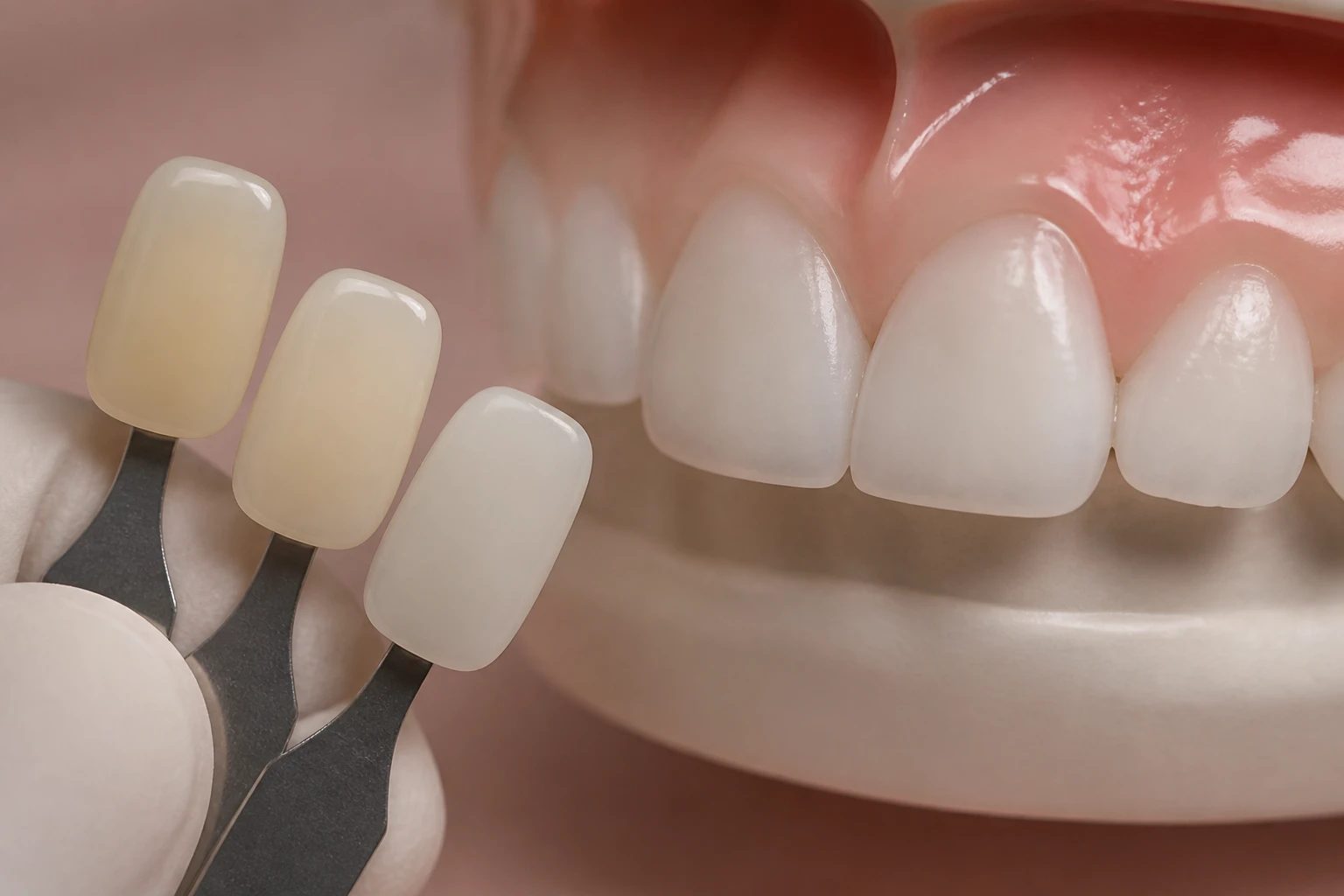
Shade: Full VITA dropdown with translucency. No "A3 or something like that."
Occlusion: Predefined options. The field that's left blank MOST often on paper.
Preparation + Implant: The data that prevents the technician from fabricating something that won't fit.
The doctor doesn't want to fill out forms. They want to say "monolithic zirconia, A3, canine guidance" in 30 seconds and move on to the next patient. Digital Rx makes that possible.
The doctor records a 42-second audio. Whisper AI transcribes it ($0.006/min). The system extracts the clinical data: material, shade, translucency, occlusion. The prescription fields fill automatically.
The admin reviews, confirms with a click, and adds any data the doctor didn't mention (but the form requires). The prescription goes out complete, legible, and with the doctor's voice as backup.
$1.08/month for 60 transcribed audios. The doctor doesn't change their habit. The admin doesn't interpret. The technician doesn't guess.
The doctor has 12 minutes between patients. They're not going to sit down and fill out a paper form with fields they don't understand the purpose of. They write the bare minimum, the admin snaps a photo, and hope the lab figures it out.
1. Audio first: The doctor speaks instead of writing. 30 seconds, not 5 minutes.
2. Visual selectors: Tap the right image instead of writing "zirconia."
3. Required validation: Can't be sent until it's complete. Not optional.
The doctor doesn't change their behavior. The system changes the format.
9:15 AM - Admin takes photo of prescription
9:16 AM - Sends via WhatsApp (compressed)
9:30 AM - Technician can't read the shade
9:32 AM - Calls the clinic
9:33 AM - Admin doesn't know, looks for doctor
12:15 PM - Doctor returns call
12:17 PM - "A3, canine guidance"
12:18 PM - Technician writes it on a sticky note
3 hours lost. Sticky note as source of truth.
9:15 AM - Doctor records 30-second audio
9:15 AM - AI transcribes and extracts data
9:16 AM - Admin confirms suggested fields
9:16 AM - Completes preparation and implant
9:17 AM - Digital Rx sent (7/7 fields)
9:20 AM - Technician opens order, Rx complete
9:20 AM - Starts production
5 minutes. Backup audio. Full traceability.
Six features that turn the prescription from "a step in the process" into a tool the doctor and lab actively use throughout the entire case.
Dr. Ramirez has 3 configurations he uses 80% of the time: monolithic zirconia crown (his most common case), posterior PFM bridge, and PMMA provisional. Before, he filled every prescription from scratch. Or worse: the admin copy-pasted and got the shade wrong.
With Rx Templates: Dr. Ramirez saved his 3 configs as templates. Now, the admin opens "Dr. Ramirez Zirconia Crown", adjusts only shade and tooth, and sends. 30 seconds instead of 4 minutes. And no copy errors.
Templates belong to the doctor, not the lab. Each doctor has their own saved configurations. Customizable, editable, reusable.
Dr. Jimenez sent the prescription with shade A3. Two hours later, he reviews the shade photo more carefully and realizes it's A3.5. With a paper prescription, he'd have to call the lab and hope someone writes down the change. With Digital Rx, he edits the field directly.
The change is logged in the timeline: which field was modified, from what value to what, who changed it, when, and the reason. The technician gets an alert: "Rx modified, shade updated." Opens Rx Comparison and sees exactly what changed.
For redo cases: compare the original Rx with the redo Rx. For bilateral work: compare tooth 14 with tooth 24 side by side. Differences are highlighted automatically.
When patient Garcia returns 8 months later for a new case, the doctor and lab have the full history: what material was used, what shade, what occlusion, how it turned out, whether there were adjustments. They don't start from zero.
For complex cases or full arch: the history shows the treatment progression. Provisional, try-in, definitive. Each prescription with its files, photos, and linked approvals.
A new technician receiving a case from a returning patient has the full context without asking. A doctor referring a patient to another specialist can share the complete Rx history with one click.
No. They record a 30-second audio, AI extracts the data, the admin confirms. The doctor doesn't change their routine.
The audio remains linked as backup. If there's a discrepancy, the timeline shows what the doctor said and what the admin confirmed.
The base fields are standard. Additional fields are configurable by specialty: orthodontics, implants, esthetics, removable.
Yes. Specific fields: brand, diameter, connection, platform. The data that prevents incompatibility.
$0.006/min with Whisper AI. 60 audios/month: $1.08. One avoided remake: $300.
Yes. Rx PDF Export generates a clean document with all fields, clinic logo, and digital signature. For patient records, insurance, patient handoff, or physical files.
They can edit fields directly. The change is documented: what was modified, from what to what, who, when, and why. The lab receives a modification alert. If production already started, the change is flagged as critical.
The doctor saves their most common configurations as personalized templates. Next time, the admin selects the template, adjusts only tooth and shade, and sends. 30 seconds instead of 4 minutes. Each doctor has their own templates.
Digital Rx has a timestamp, identified author, and backup audio. More evidence than paper. For specific legal requirements, consult your local advisor.
Digital Rx is lightweight: just text and selections. Works on any connection. Heavy files use resumable upload separately.
Try TrazaLab on full arch, implants, esthetic cases, or any case with heavy files.