FULL EXPERIENCE
4 photos. 3 zones.
Zero interpretation.
TrazaCaptura guides you. TrazaTono analyzes with CIEDE2000. Your lab gets calibrated data.
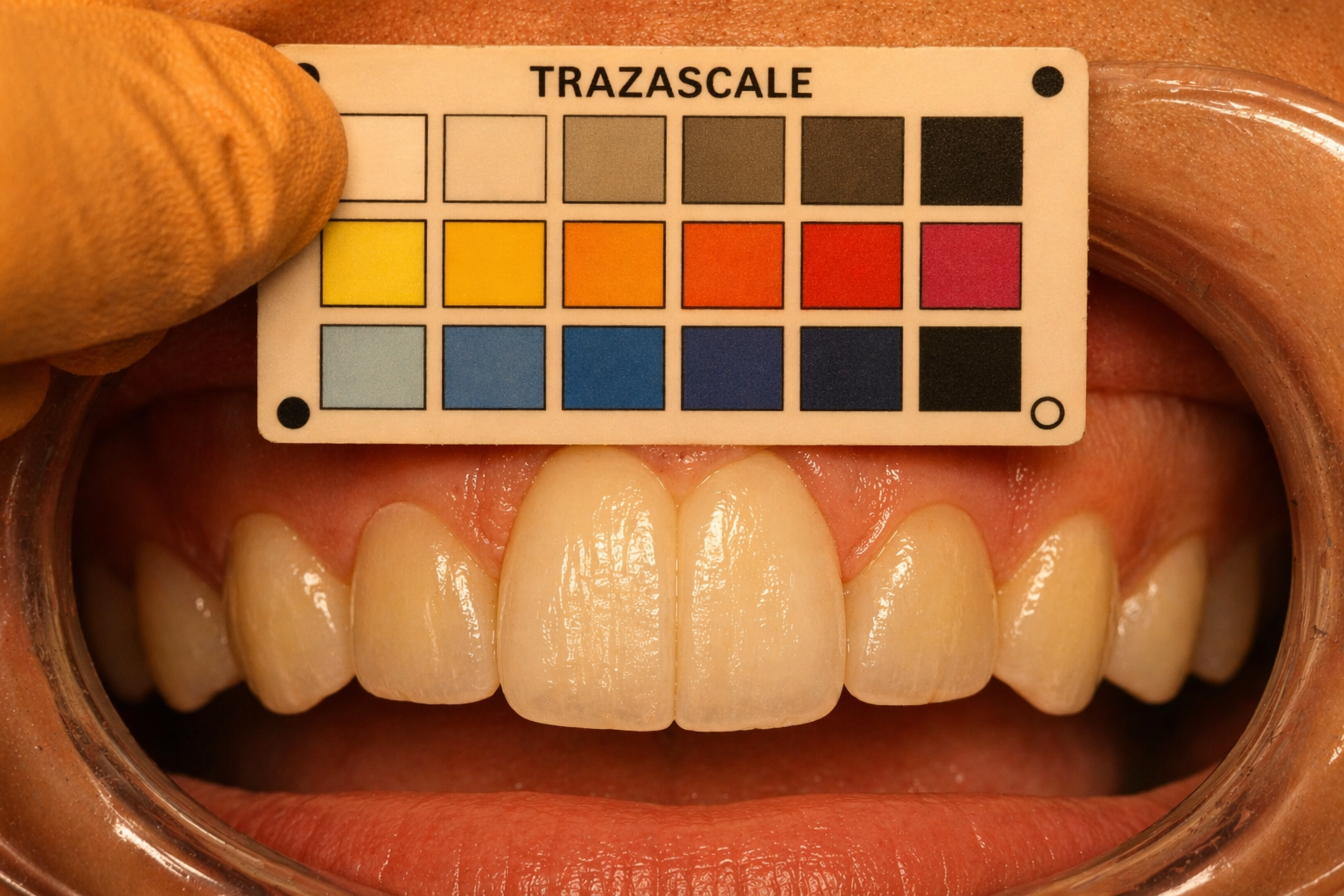
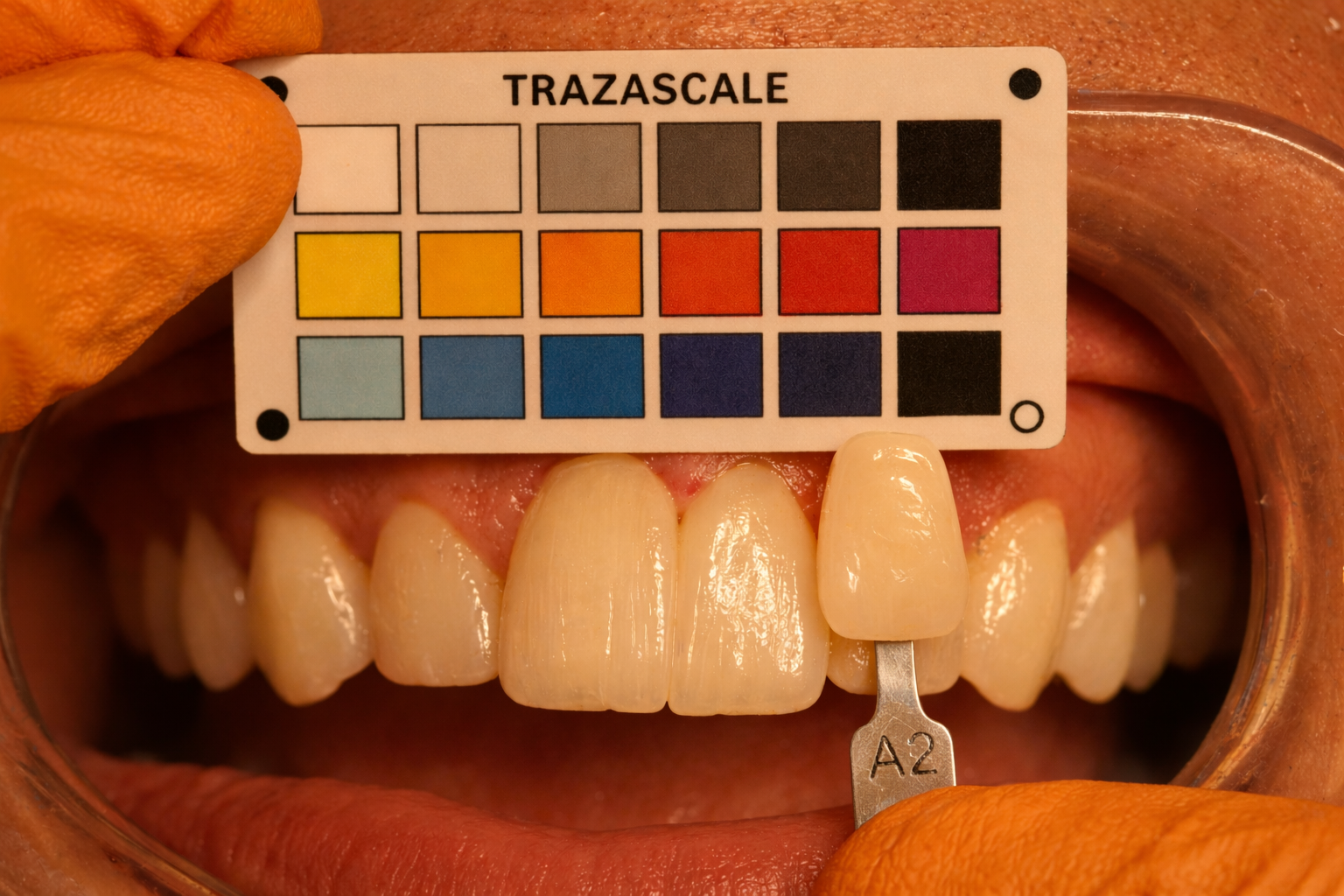
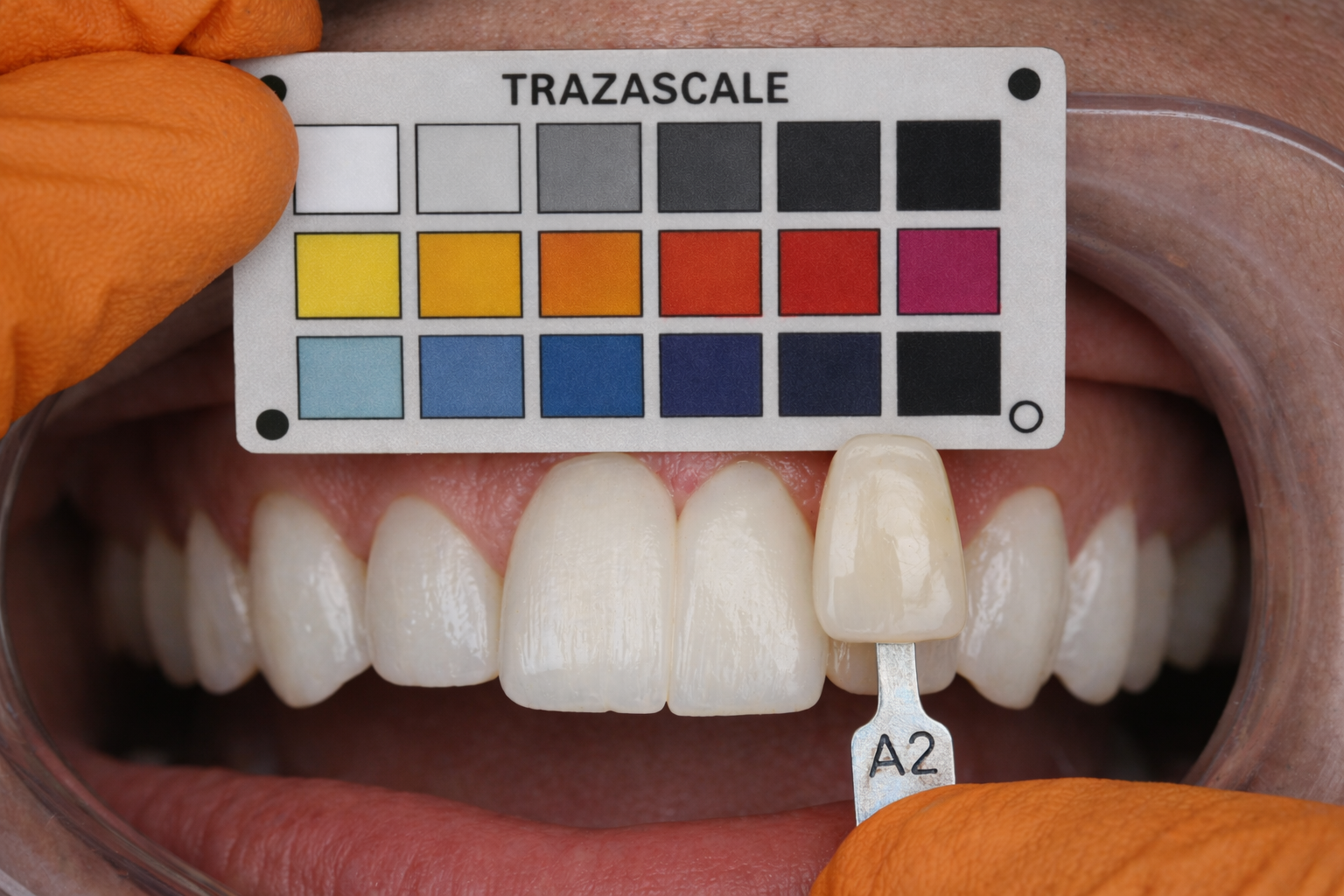
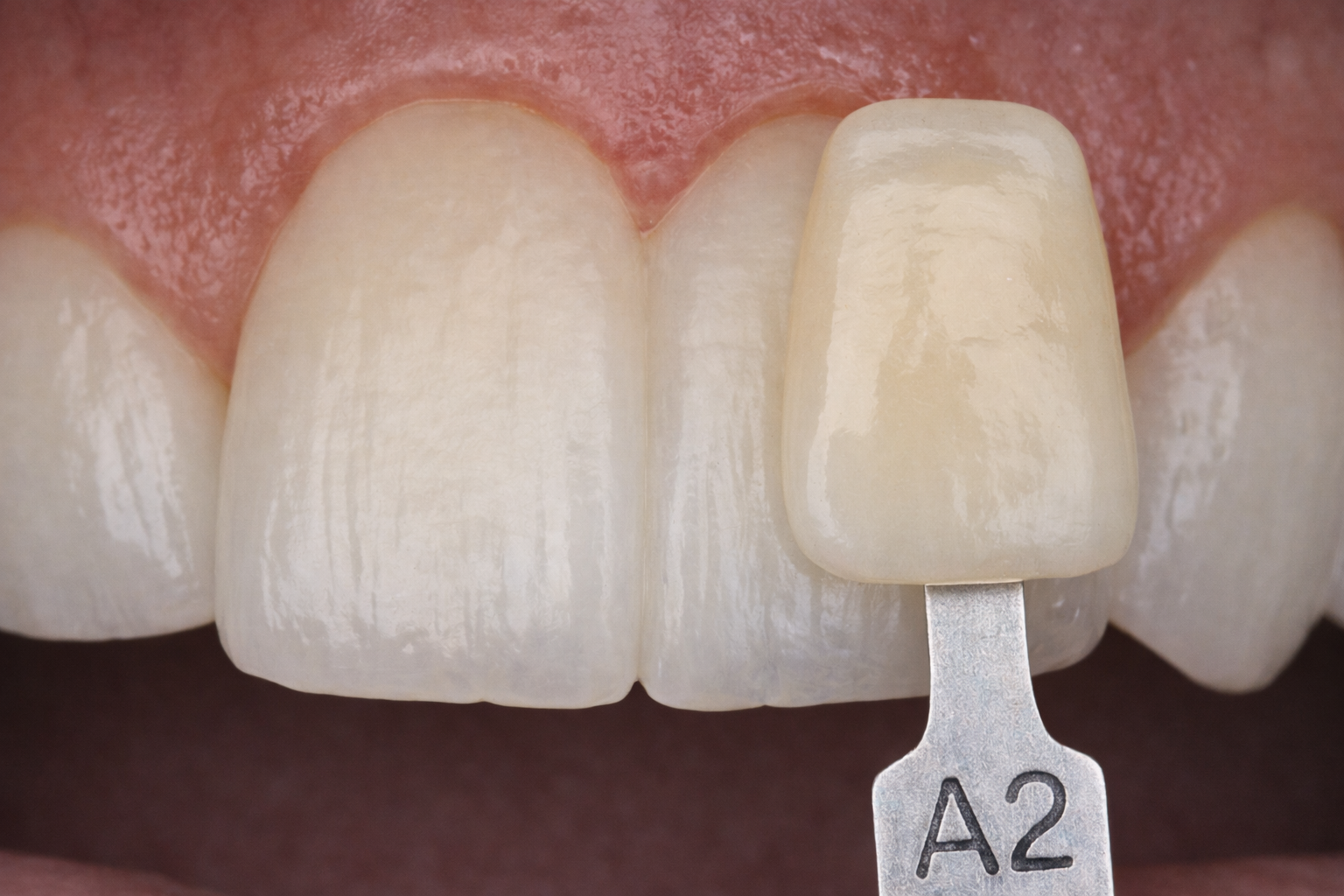
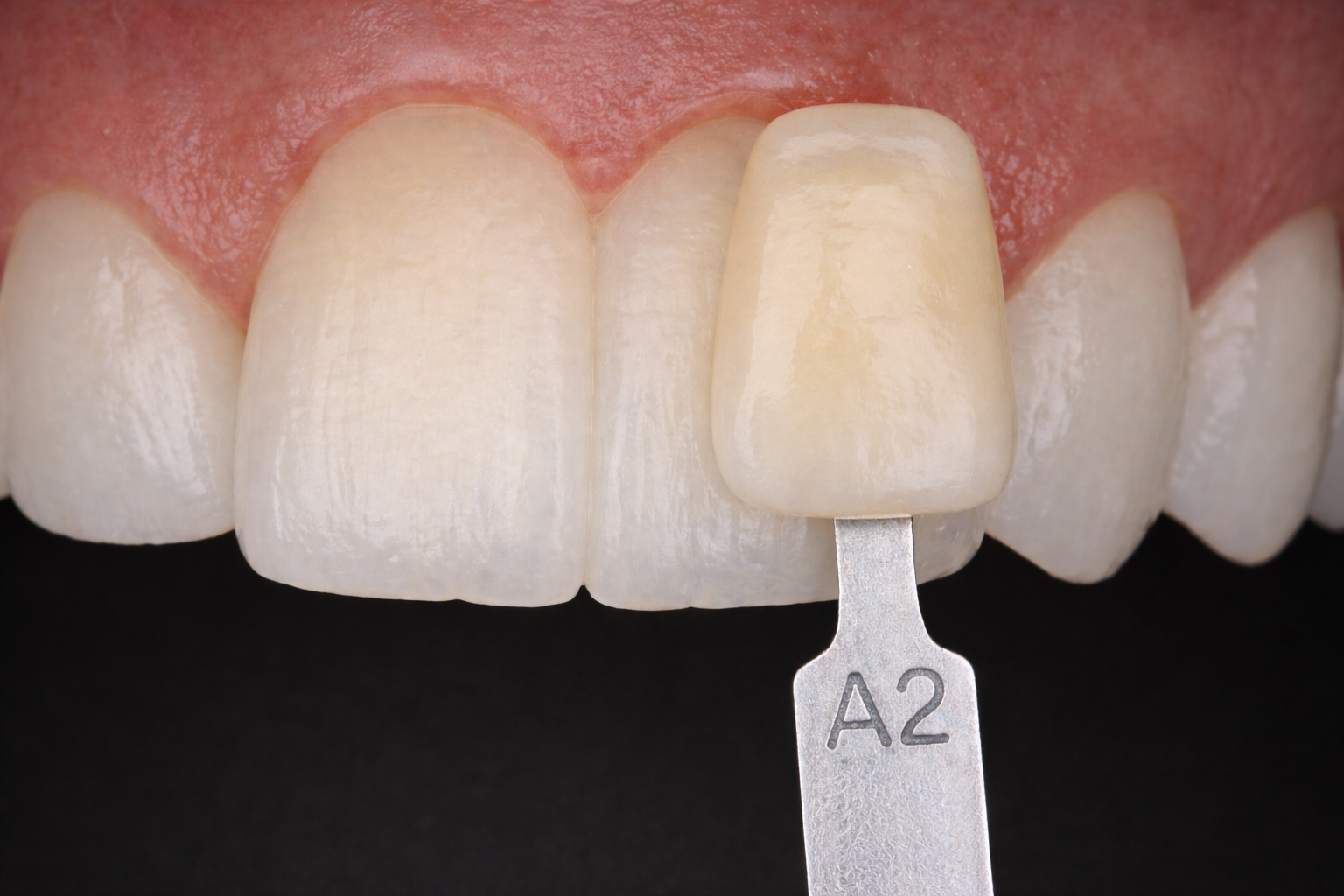
Shade precision your lab can verify. 4 guided photos, 3 color zones, calibrated result. Your lab receives exact data — to accelerate production.
TrazaCaptura guides you. TrazaTono analyzes with CIEDE2000. Your lab gets calibrated data.
26% of remakes in anterior restorations are due to shade errors. It's not lack of skill — it's lack of science.
The fluorescent light distorts perception. Every hour of the day produces a different result on the same tooth.
The camera adjusts automatically. The shade you see on screen is not the real shade of the tooth.
Two people see the same tooth and report different shades. Visual fatigue worsens throughout the day.
"It's an A2... or maybe A3." Without a scientific reference, every case is a gamble.
From clinical photo to VITA shade with scientific confidence.
Photography with TrazaScale reference card under operatory conditions.
Automatic chromatic adaptation. Compensates the color temperature of the operatory light using the white reference.
Flash reflection pixels are automatically excluded. Gingival filtering in the cervical zone prevents gum contamination.
The tooth is divided into cervical, body, and incisal. Each zone is analyzed independently — because the lab needs that precision to layer ceramic.
sRGB → Linear RGB → CIE XYZ (D65) → CIE L*a*b*. Perceptually uniform, device-independent color space.
ΔE00 calculation against 49 VITA shades with dental parameters: kL=2, kC=kH=1. Weighs luminosity, chroma, and hue.
VITA shade per zone, confidence ΔE, clinical threshold rating, and "go lighter" recommendation. Automatically saved to the case.
The cervical zone is more saturated and darker. The body is the dominant shade. The incisal edge is more translucent and lighter. TrazaTono analyzes each zone independently — because the lab needs that precision to layer ceramic.
Higher saturation, gingival influence. Higher a*b* values.
Dominant shade. Primary reference for VITA selection.
Greater translucency, lower saturation. Key for natural appearance.
Every L*a*b* value measured with spectrophotometer under D65 illuminant, 2-degree standard observer.
A1-A4, B1-B4, C1-C4, D2-D4. The most widely used system in dentistry worldwide.
Three-dimensional system organized by luminosity, chroma, and intensity. Greater precision in intermediate shades.
BL1-BL4. Bleaching shades for high-luminosity aesthetic cases.
TrazaTono rates every match against ISO/TR 28642 and Paravina et al. 2015. Dental parameters: kL=2, kC=kH=1.
No visible difference to the human eye. Perfect match.
Detectable only with instruments. Clinically perfect.
Visible but within tolerance. Most people won't notice.
Visible discrepancy. Remake territory.
When the match is marginal, TrazaTono recommends the lighter shade. The lab can darken with external staining. A dark shade means remake. Chroma-dependent thresholds per Gomez-Polo et al. 2023.
TrazaTono vs. alternatives on the market.
| Feature | TrazaTono | Camera alone | ShadeWave | eLAB Primo | Spectrophotometer |
|---|---|---|---|---|---|
| Cost | Included (free) | Free | ~$300 | ~$250+ | $6,000-$12,000 |
| Hardware | None (browser) | None | Proprietary device | Proprietary kit | Dedicated device |
| CIEDE2000 (ΔE00) | ✓ | ✗ | ΔE*ab | ✓ | ✓ |
| VITA Shades | 49 (Classical + 3D-Master + Bleach) | ✗ | 16 | 29 | 16-29 |
| 3-zone analysis | ✓ Cervical / Body / Incisal | ✗ | ✗ | ✓ | Manual repositioning |
| Ambient subtraction | ✓ Auto dual capture | ✗ | ✗ | ✗ | Integrated LED |
| Clinical thresholds | ISO/TR 28642 + Paravina | ✗ | ✗ | ✓ | ✓ |
| Integrated with cases | ✓ Automatic | ✗ | ✗ | ✗ | ✗ |
26% of remakes start with an incorrect shade. TrazaTono makes it impossible.