Stratum Dental Laboratory
Menu
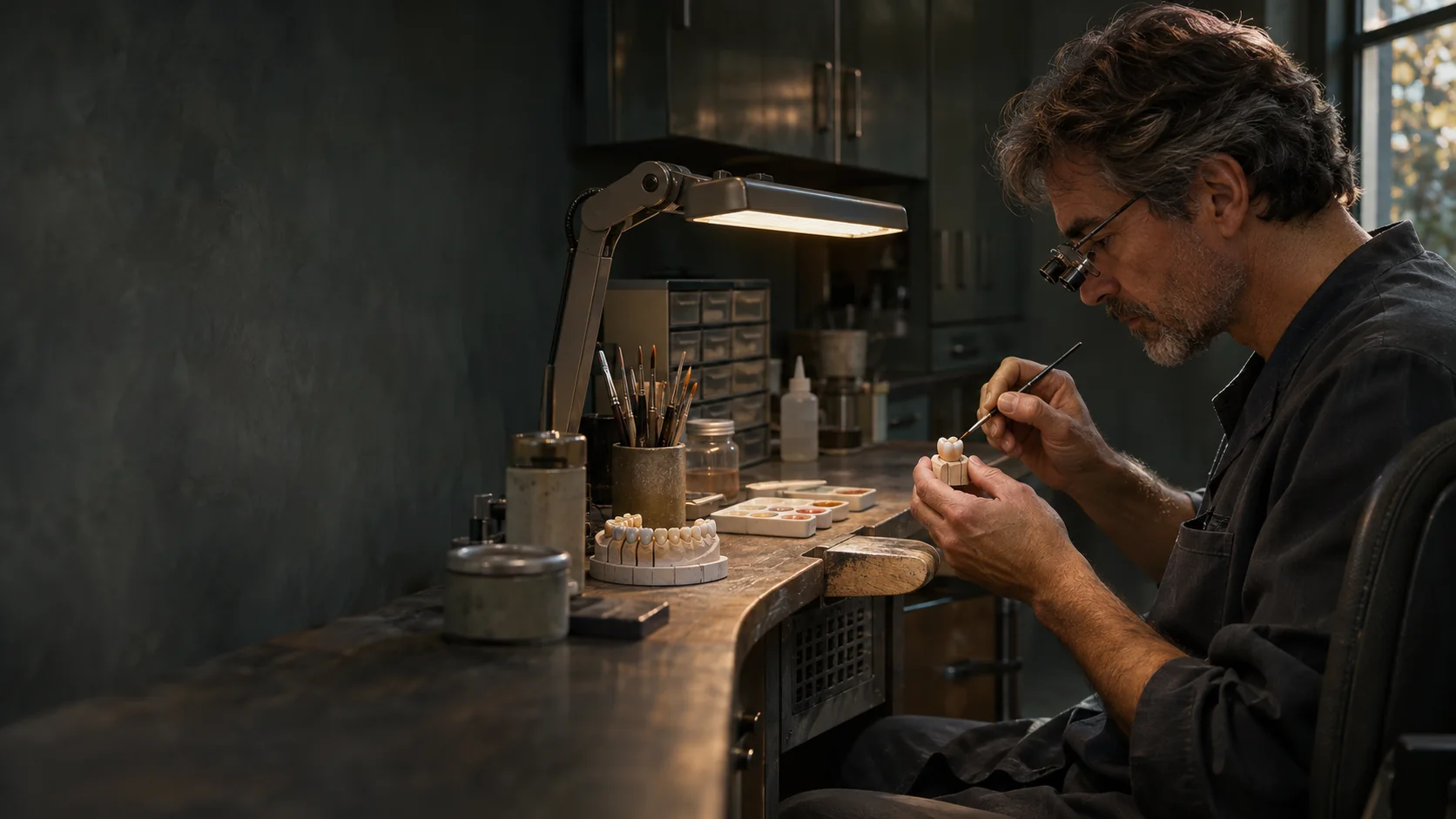
A ceramist applying color to a crown at a workbench under a task light

Fixed prosthodontics laboratory

Dental ceramics,
finished by hand.

Crowns, bridges and implant restorations for referring dentists. Designed from your prescription and finished at the ceramist’s bench.

Restorations on the model.

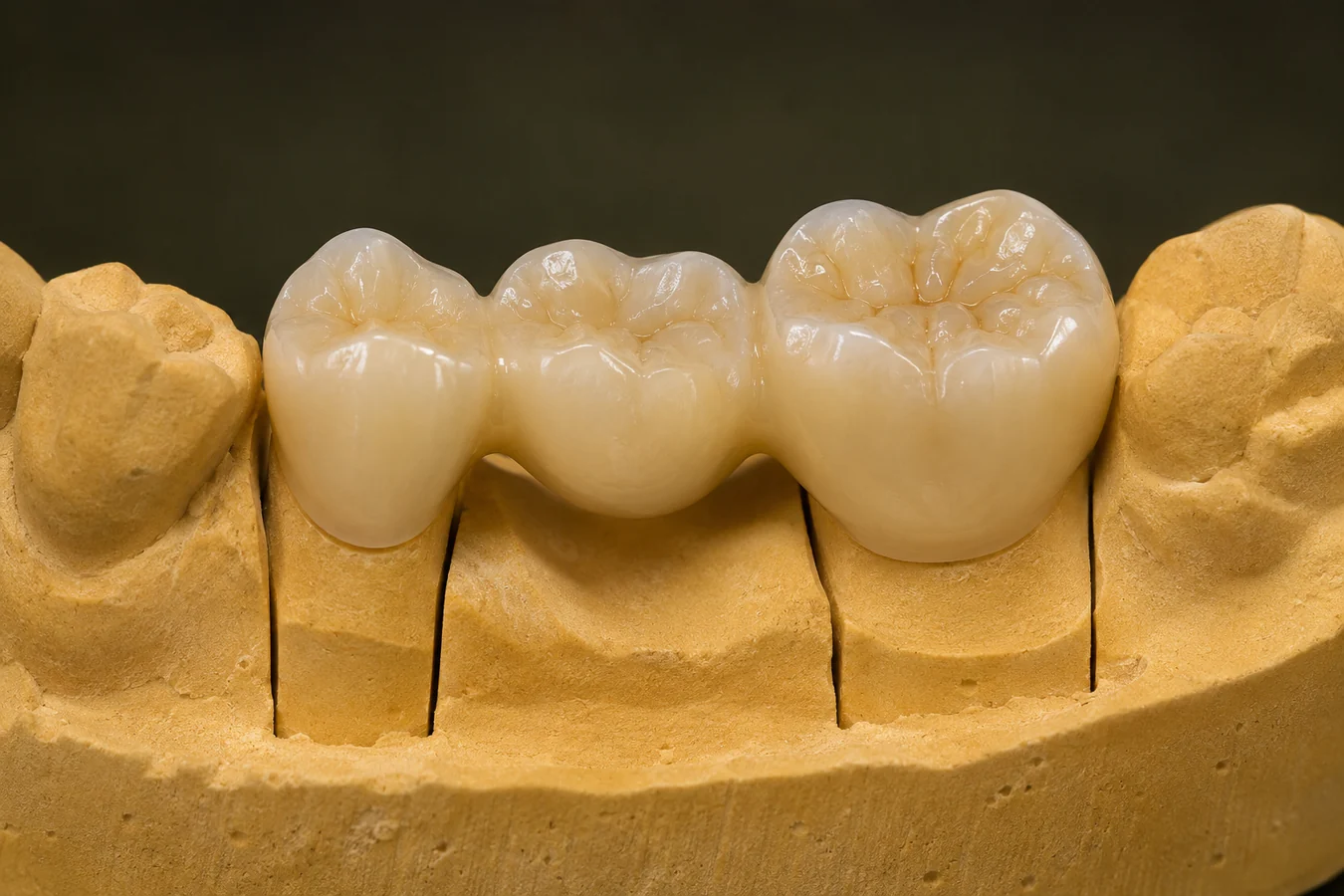
Three ivory posterior units on a sectioned stone cast, with the middle unit spanning the gap between the two dies.
Magnified grooves between the cusps of the molar unit.
Occlusal grooves
Sectioned working castIllustrative restoration

Fixed bridgework

The three-unit
posterior bridge.

Two retainers seat on the prepared dies. Between them, the pontic replaces the missing tooth. All three units are milled from one piece of zirconia.

Material
Monolithic zirconia
Bench check
Seating on both dies, proximal contacts and occlusion against the opposing cast
See how the bridge is made

Digital fabrication

From scan to sintered zirconia.

The technician designs the bridge on a scan of the arch. The mill cuts it oversized to allow for shrinkage in the sintering furnace.

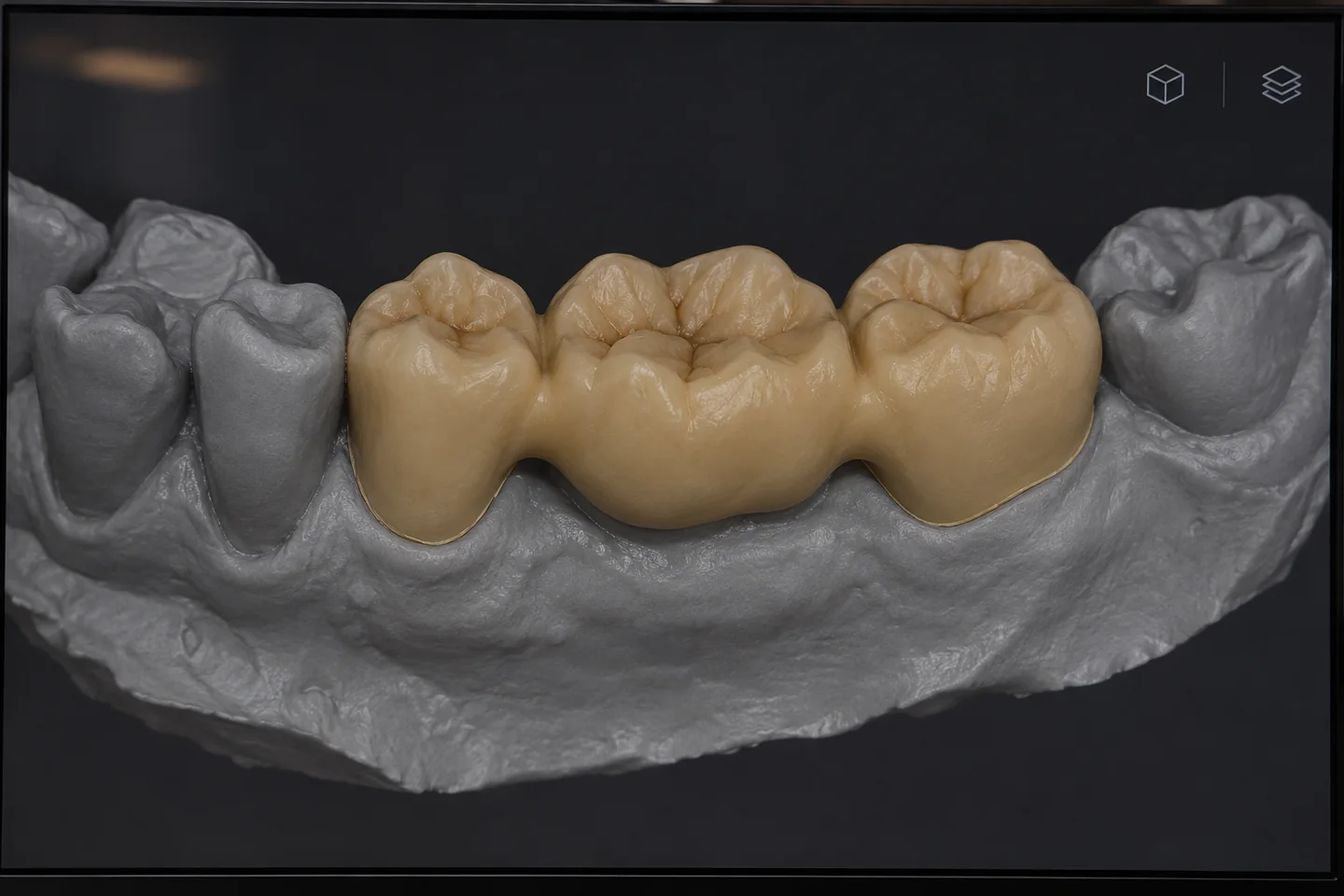
  1. Three ochre bridge units connected across a gray digital scan of the posterior arch.

    Dental CAD

    Design the span

    The designer sets the margins on the two abutments, then shapes the pontic and the connectors that join the three units.

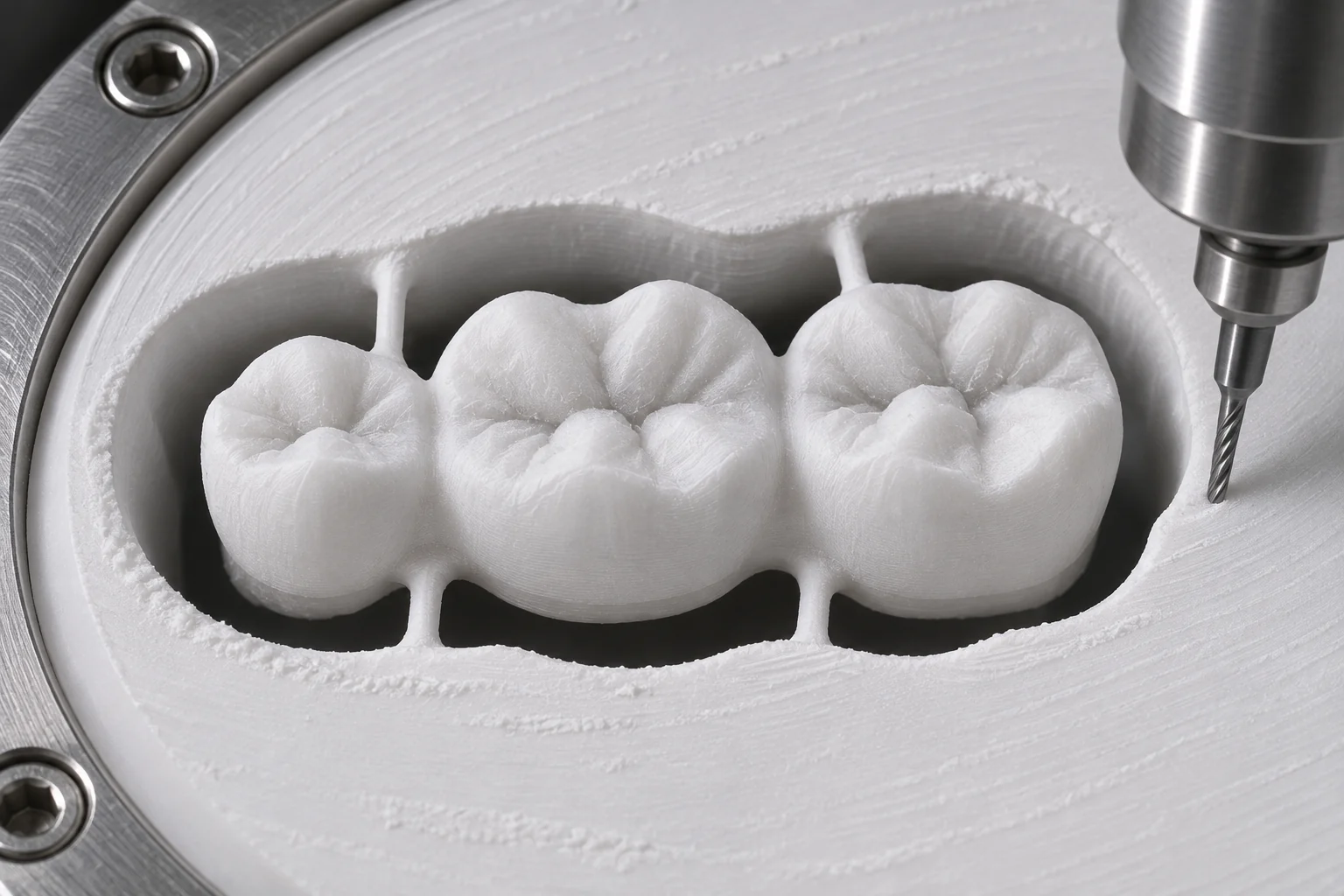
  2. Milling bur over a three-unit bridge still attached to the zirconia disc by narrow temporary sprues.

    CAM milling

    Cut from the disc

    The mill carves the enlarged bridge from presintered zirconia. Temporary sprues hold it in the disc until the technician cuts it free.

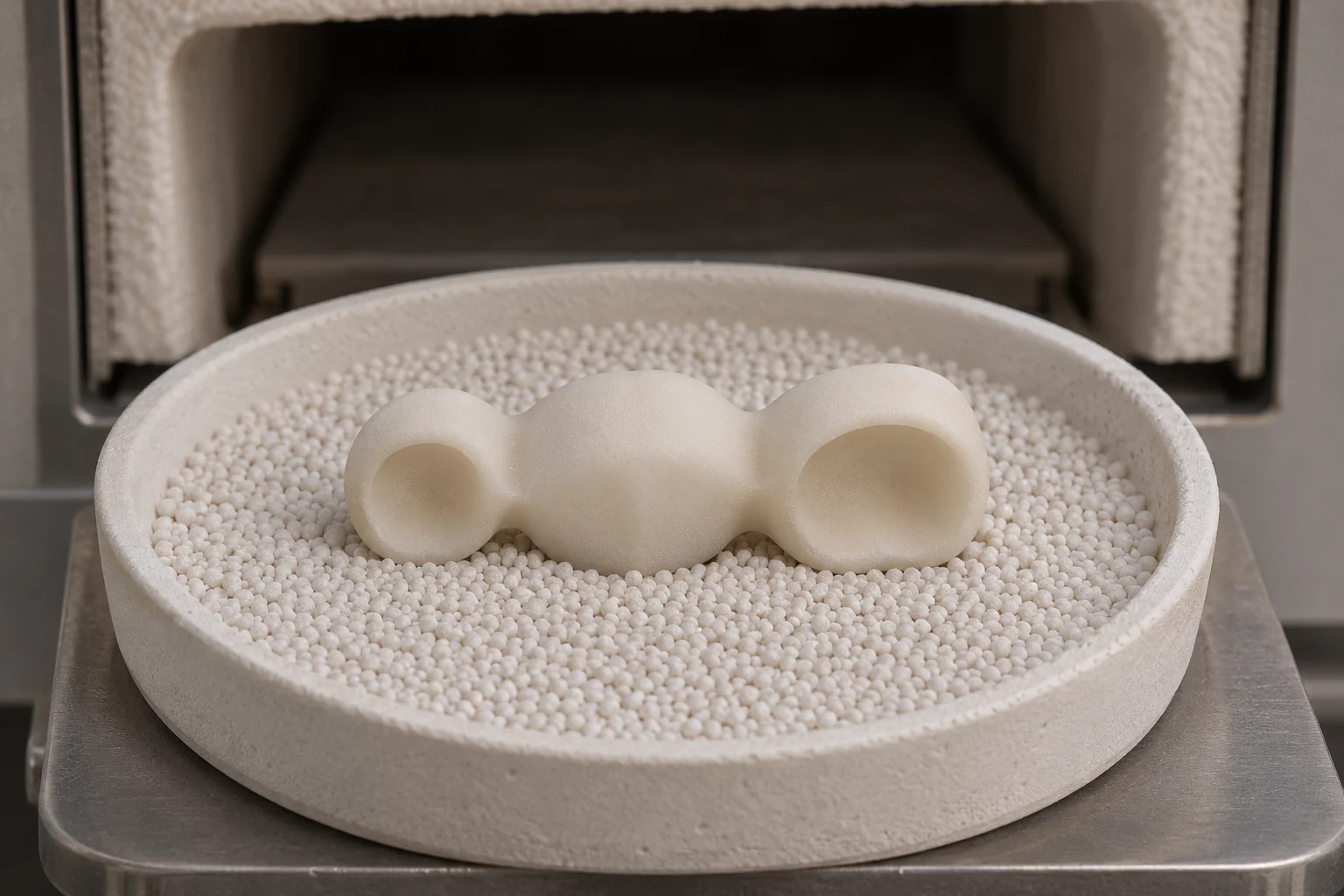
  3. The detached bridge rests on ceramic beads in a sintering tray at the furnace opening.

    Sintering furnace

    Fire to size

    The technician smooths the sprue sites and loads the bridge. During sintering, the zirconia densifies and shrinks to its designed dimensions.

Inspect the finished bridge
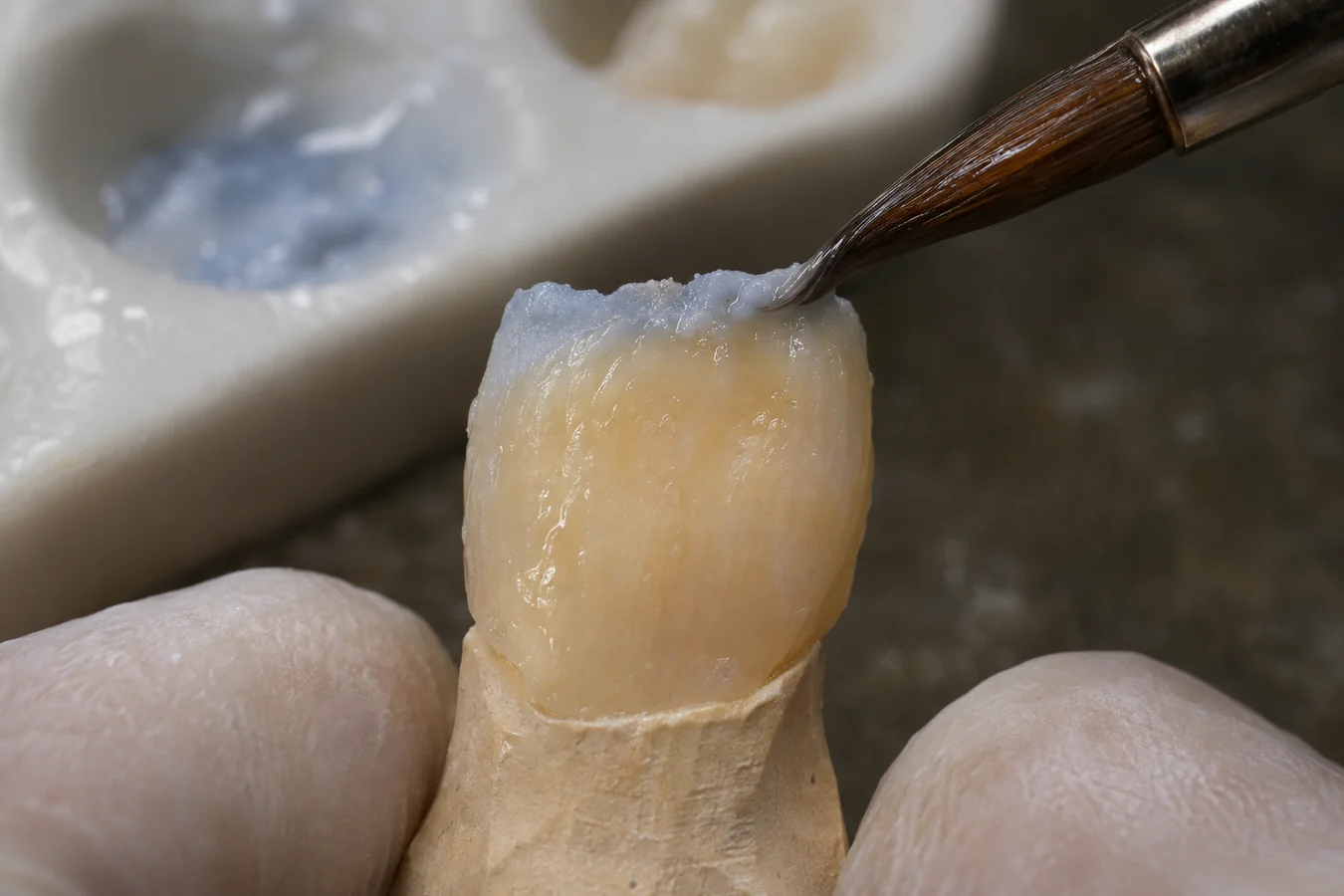
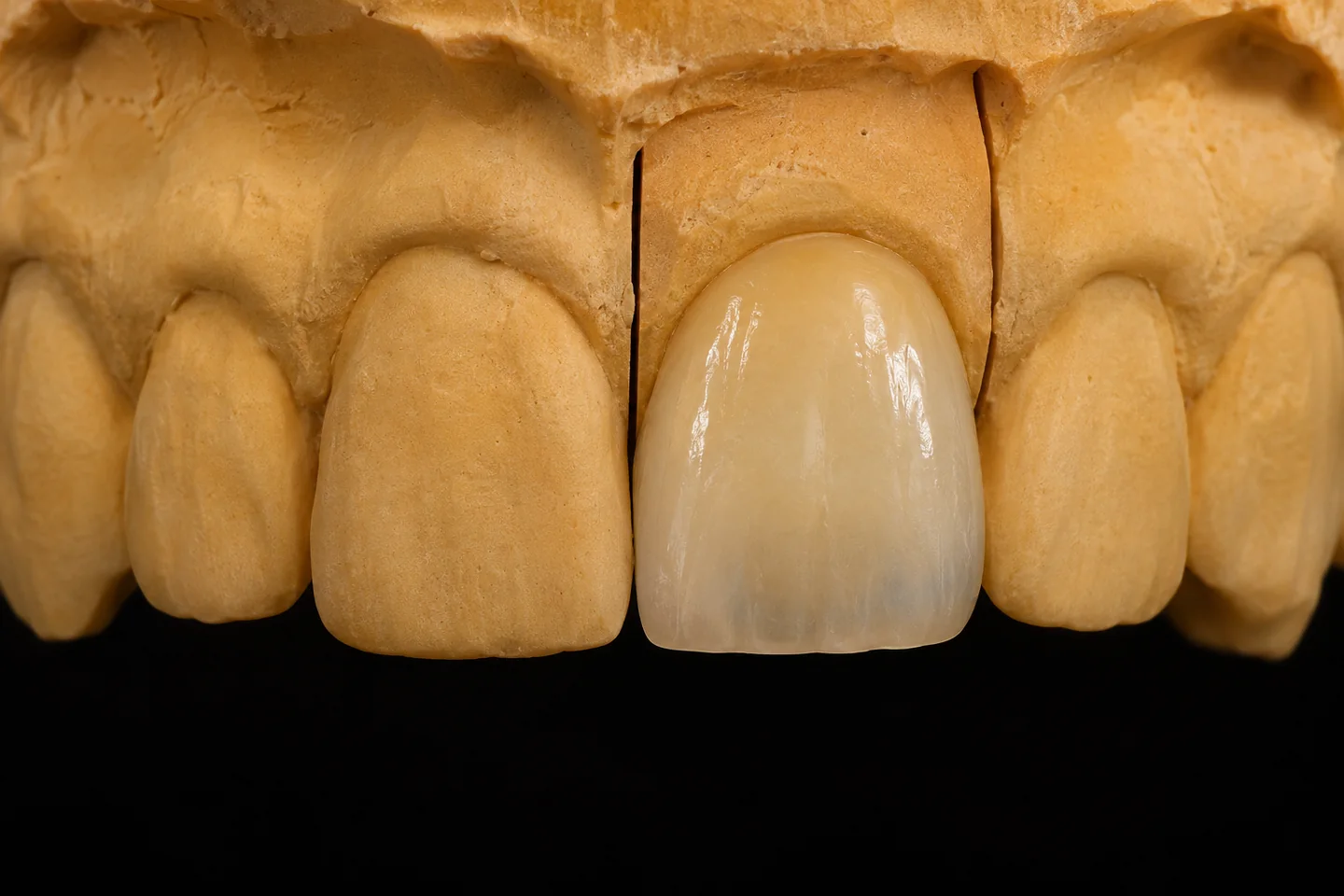
A fine brush deposits damp blue-gray porcelain at the incisal edge of a single crown held on its die.

At the ceramist’s bench

Building the
incisal edge.

The brush lays a small increment of translucent porcelain over the dentin-colored body of an anterior crown. The ceramist shapes this layer while it is damp, before it goes into the porcelain furnace.

After firing, the ceramist refines the line angles and surface texture. On the finished crown, those contours guide the reflection down the face of the tooth.

Inspect the finished crown

For referring practices

Prepare a lab case.

Choose the restoration and how you’ll send the records. Print a checklist for the team member preparing the case.

Records arriving by
Records to prepare

Meet the lab team.

At Stratum, we make crowns and bridges to your prescription. If a scan leaves a margin unclear, we call your practice while the design is still on screen.

Case coordinator
Checks your prescription against the scans or impressions and confirms the return date with your practice.
CAD designer
Traces the preparation margins, shapes the bridge and checks the bite against the opposing arch.
Milling technician
Positions the bridge in a zirconia disc, runs the mill and removes the supports before sintering.
Ceramist
Matches the porcelain to your shade photographs, refines the surface texture and checks the restoration on its cast.
From left, the coordinator holds a case tray, the CAD designer sits beside a digital bridge model, the milling technician stands at the zirconia mill and the ceramist finishes a crown under a bench light.